
Concrete slabs are supposed to feel rock-solid and permanent. Yet somehow, a driveway that looked perfectly level a few years ago suddenly turns into a tilted mess with cracks, puddles, and tripping hazards. One corner sinks, another lifts, and before long the slab starts looking like a miniature roller coaster. If you’ve noticed uneven concrete around your home, you’re definitely not alone. Sidewalks, patios, garage floors, pool decks, and driveways all suffer from settling and shifting over time.
The frustrating part? The concrete itself usually isn’t the real problem. What’s happening underneath the slab matters far more than what you see on the surface. Soil erosion, moisture changes, poor compaction, and freeze-thaw cycles can slowly destabilize the ground until the concrete loses support and sinks unevenly. According to recent industry reports, concrete leveling typically costs 50% to 75% less than full slab replacement, making repair far more affordable in many situations.
Before you grab a bag of concrete patch or call a contractor, it helps to understand why slabs become uneven, how serious the issue really is, and which repair methods actually last. Some fixes are perfect for a simple DIY weekend project, while others require specialized lifting equipment and professional expertise. Choosing the wrong solution is like putting a bandage on a broken pipe; it might look okay temporarily, but the problem underneath keeps growing.
What Causes Concrete Slabs to Become Uneven?
Concrete may look immovable, but the ground beneath it behaves more like a living system. Soil expands, contracts, shifts, absorbs water, dries out, and erodes constantly. A concrete slab simply rides on top of that unstable foundation. When the support underneath changes, the slab reacts by sinking, tilting, or cracking. That’s why even well-poured concrete can become uneven years later.
Soil Erosion and Washout
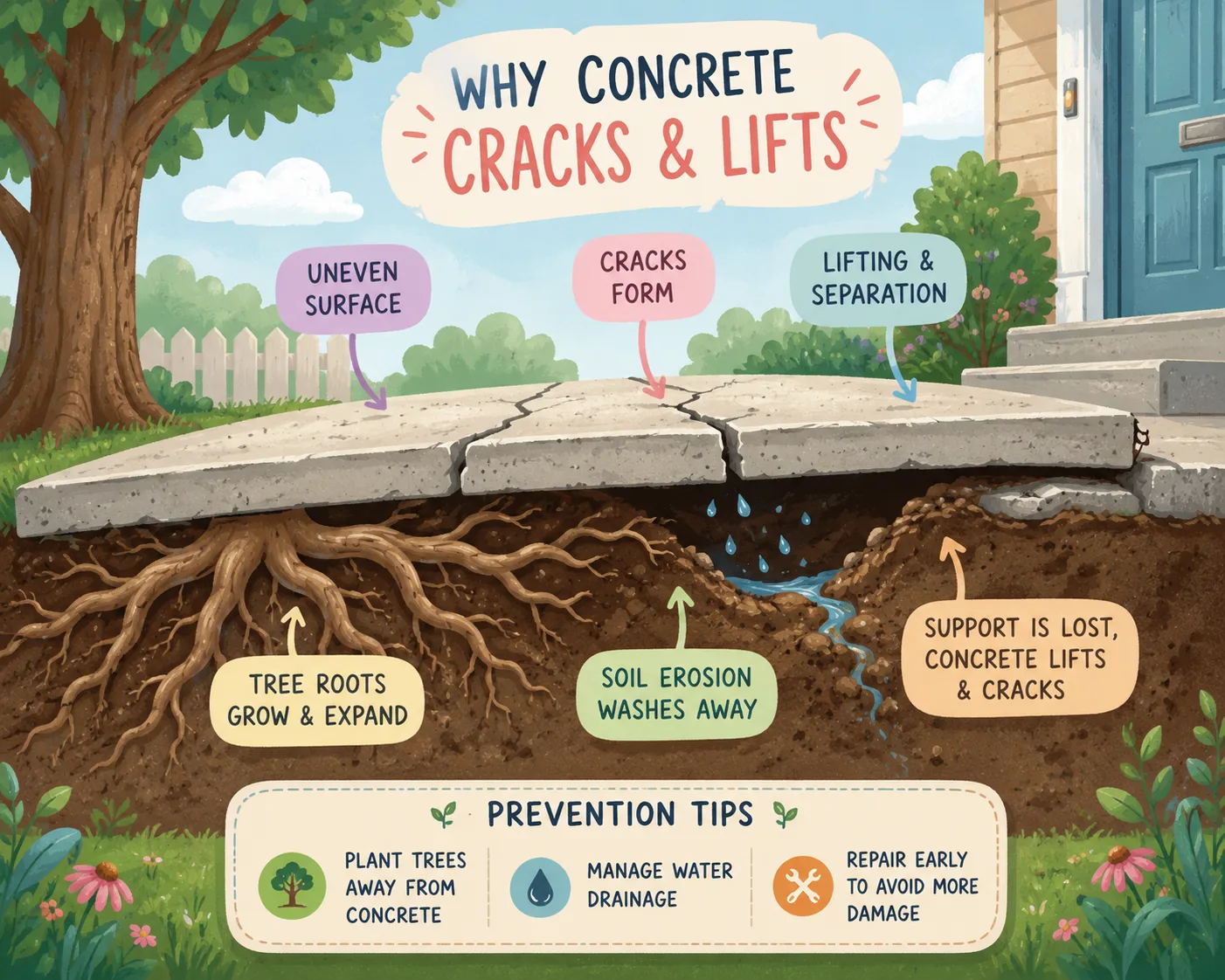
One of the most common reasons for slab settlement is soil erosion. Water is incredibly powerful beneath concrete. Heavy rain, broken gutters, poor drainage, leaking pipes, or improper grading can slowly wash away supporting soil underneath the slab. Once empty spaces develop, the concrete no longer has uniform support. Think of it like a mattress with missing springs; eventually certain areas collapse under pressure.
Driveways and sidewalks are especially vulnerable because they’re constantly exposed to water runoff. In colder climates, melting snow creates repeated saturation cycles that weaken the subsoil over time. Water intrusion also causes fine soil particles to migrate away from the slab, leaving hidden voids beneath the concrete surface. Those voids are often invisible until the slab suddenly sinks or cracks.
Recent concrete repair studies show that soil instability and water intrusion remain the leading causes of slab settlement in residential properties. A slab rarely settles “for no reason.” There is almost always an underlying moisture or soil support issue contributing to the movement.
Poor Soil Compaction
Sometimes the problem begins long before the concrete is poured. Builders are supposed to compact soil properly before installing a slab. If the soil wasn’t compacted enough, it gradually settles under the slab’s weight over time. This is especially common in newer subdivisions where builders move large amounts of fill dirt quickly during construction.
Poor compaction creates uneven density beneath the slab. Some sections remain stable while others compress slowly under load. The result is differential settlement, where one area sinks more than another. Garage floors, patios, and interior slab foundations frequently experience this issue years after construction.
Clay-heavy soils make things even more complicated. Clay expands dramatically when wet and shrinks when dry. That constant swelling and shrinking cycle acts like a slow-motion earthquake beneath your concrete. You may notice slabs moving seasonally depending on rainfall and temperature conditions.
Tree Roots and Expanding Soil
Trees add beauty and shade to a property, but underground they can behave like wrecking balls. Large roots grow beneath slabs searching for moisture and nutrients. As roots expand, they can physically lift sections of concrete upward. At the same time, roots absorb moisture from nearby soil, causing shrinkage and settlement in surrounding areas.
This creates a strange combination of raised and sunken concrete in the same slab. Sidewalks near mature trees often develop dangerous ridges and uneven joints because of root pressure. In some cases, removing the tree doesn’t immediately solve the problem because the soil continues shifting after the roots decay.
Expansive soil conditions also contribute heavily to slab movement. Some soil types naturally increase in volume when wet and contract when dry. Over years, these cycles place enormous stress on concrete surfaces. Even strong slabs eventually lose the battle against constantly moving ground.
Signs Your Concrete Slab Has a Serious Problem
Not every uneven slab is a structural emergency. Some settlement is relatively minor and mostly cosmetic. The challenge is figuring out when the problem becomes dangerous or expensive enough to demand immediate attention.
Cracks, Gaps, and Water Pooling
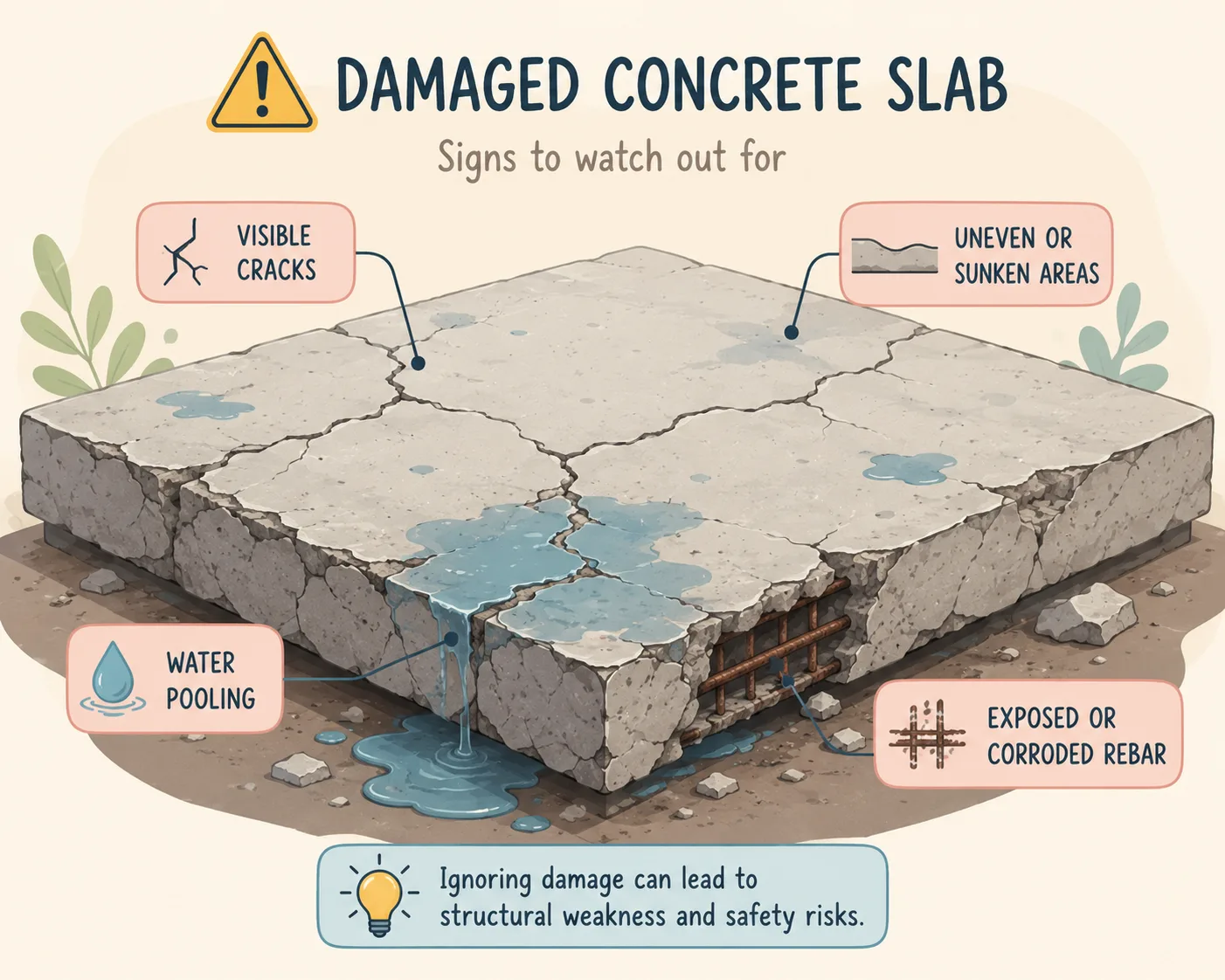
Small hairline cracks aren’t unusual in concrete. Almost all slabs crack eventually due to shrinkage and temperature changes. The real warning signs appear when cracks widen, separate vertically, or form uneven edges. If one side of the crack sits higher than the other, settlement is actively occurring beneath the slab.
Water pooling is another major clue. Concrete should drain properly away from structures. When slabs sink unevenly, low spots collect water after rainstorms. Standing water accelerates deterioration by seeping into cracks and eroding more soil underneath. It becomes a vicious cycle where moisture causes settlement, and settlement traps even more moisture.
Watch for these common indicators:
| Warning Sign | Possible Cause | Severity |
|---|---|---|
| Hairline cracks | Normal settling | Low |
| Uneven crack edges | Differential settlement | Moderate |
| Water pooling | Slab sinking | Moderate |
| Large gaps beneath slab | Soil erosion | High |
| Rapid movement | Structural instability | Severe |
Trip Hazards and Structural Risks
Safety concerns often become the deciding factor for repairs. Uneven sidewalks and patios create serious tripping hazards, especially for children, elderly individuals, and guests. Many homeowners don’t realize they could potentially face liability issues if someone gets injured because of hazardous concrete conditions.
Garage slabs and foundation-adjacent slabs deserve even closer attention. Significant settlement near the home can redirect water toward the foundation, potentially causing structural damage inside the building. Doors may stop closing properly, walls can crack, and floors may become uneven indoors.
Industry experts often recommend professional evaluation when settlement exceeds 1 to 2 inches, especially if the movement appears active or continues worsening over time.
Evaluating the Severity of an Uneven Concrete Slab
Before choosing a repair method, you need to assess how serious the problem actually is. Some slabs can be repaired quickly and cheaply. Others require full replacement because the underlying support system has completely failed.
Minor Cosmetic Settling
Minor settlement usually involves small height differences, light cracking, or slight water pooling without major structural concerns. These slabs are often excellent candidates for leveling or patching instead of replacement.
A patio corner sinking half an inch, for example, might simply need void filling or a self-leveling overlay. In these cases, the slab itself remains structurally sound. The issue mainly involves restoring appearance and drainage performance.
DIY repairs often work well for minor problems because the underlying soil conditions remain relatively stable. The goal is correcting surface imperfections before they worsen.
Moderate Slab Movement
Moderate settlement involves more noticeable sinking, wider cracks, and clear tripping hazards. The slab may still be salvageable, but the repair process becomes more technical.
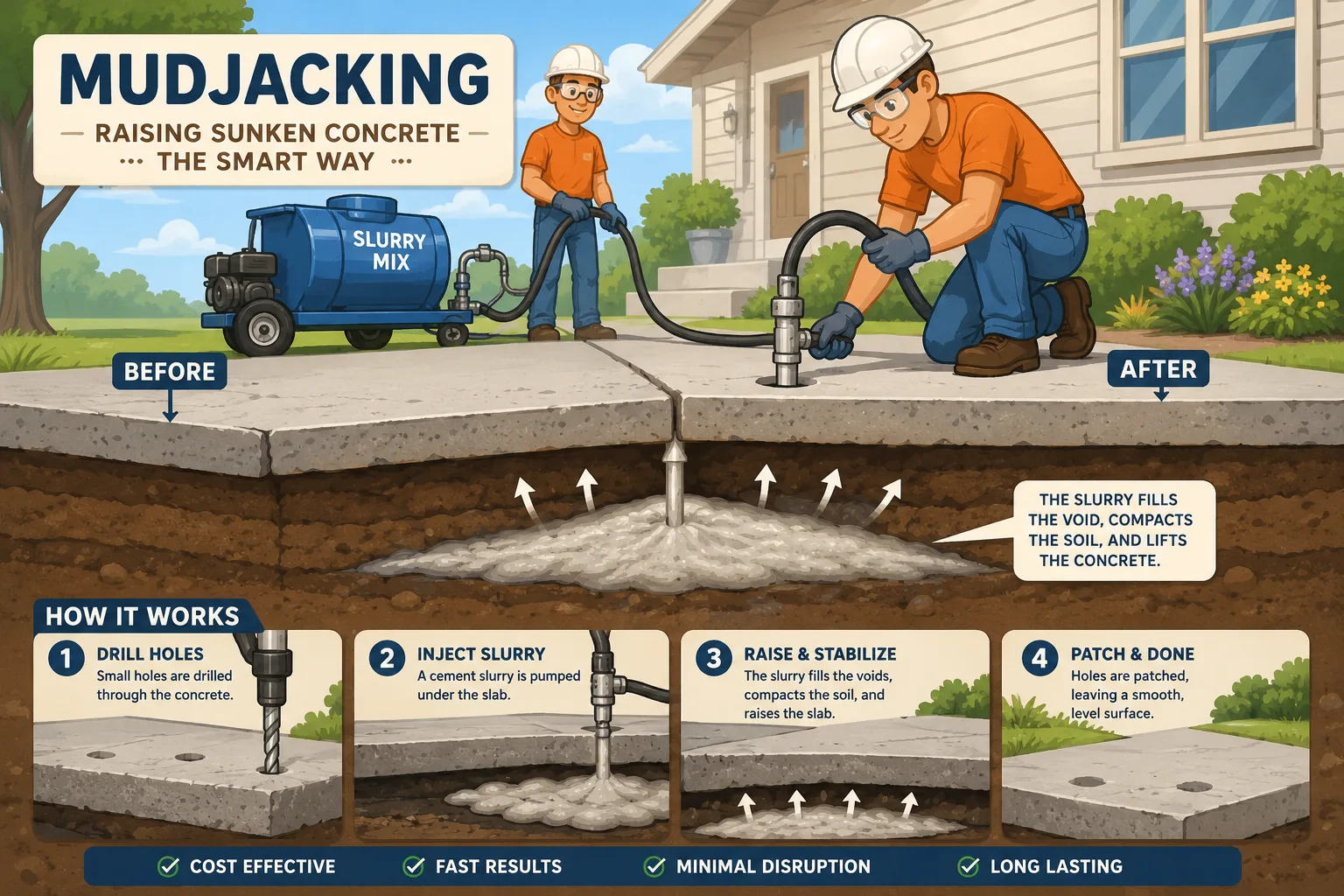
This is where mudjacking and polyurethane foam injection usually enter the picture. Both methods lift slabs by filling voids beneath the concrete. Contractors drill holes through the slab and inject material underneath until the concrete rises back into position.
Recent repair cost reports estimate leveling projects typically range from $500 to $3,000, depending on slab size and repair method. Compared to full replacement, leveling often saves homeowners thousands of dollars.
Severe Structural Failure
Some slabs are simply beyond repair. If concrete is shattered into multiple sections, sinking dramatically, or deteriorating badly from age and erosion, replacement becomes the smarter long-term investment.
Experts commonly recommend replacement when settlement exceeds 4 to 6 inches or when slabs show severe cracking and spalling. Trying to lift heavily damaged concrete can sometimes create additional cracking during the process.
Severe settlement may also indicate deeper soil instability problems requiring geotechnical evaluation. Fixing the slab without addressing the soil is like rebuilding a house on quicksand.
DIY Concrete Leveling vs Professional Solutions
Every homeowner loves the idea of saving money with DIY repairs. Sometimes that works beautifully. Other times it creates an even bigger headache.
When DIY Repairs Make Sense
DIY repairs are best for small, stable issues where the slab remains mostly intact. Self-leveling concrete compounds work well for garage floors, basements, and indoor surfaces with shallow depressions or uneven spots.
Concrete grinding is another effective DIY option for raised edges and minor trip hazards. Specialized grinders shave down high spots to create a smoother transition between slab sections. This method works especially well when tree roots or slight lifting create uneven joints.
Simple crack filling and drainage corrections can also prevent minor settlement from worsening. Cleaning gutters, redirecting downspouts, and improving grading around slabs often stops ongoing erosion beneath the concrete.
Situations That Require a Contractor
Professional repairs become necessary when slabs need lifting, stabilization, or structural assessment. Mudjacking and foam injection require specialized equipment, precise pressure control, and experience. Injecting too much pressure can crack the slab. Too little pressure won’t provide proper support.
Polyurethane foam leveling has become increasingly popular because it’s lightweight, fast-curing, and minimally invasive. Industry data shows foam repairs can often support traffic within 15 to 30 minutes, compared to 24 to 48 hours for traditional mudjacking.
Contractors also identify hidden causes of settlement that homeowners might miss, including underground leaks, unstable fill soil, and drainage design flaws.
Step-by-Step Methods for Fixing Uneven Concrete
Different problems require different repair strategies. Choosing the right method depends on the severity of settlement, slab condition, and long-term performance goals.
Using Self-Leveling Compound
Self-leveling compounds work like pancake batter for concrete floors. The material spreads naturally across low areas and hardens into a smooth surface. This method is ideal for interior slabs, garages, and basements where unevenness is relatively shallow.
The process usually follows these steps:
- Clean the slab thoroughly
- Repair cracks and loose debris
- Apply bonding primer
- Mix leveling compound
- Pour and spread evenly
- Allow proper curing time
This method improves appearance and functionality but doesn’t address major structural settlement underneath.
Mudjacking or Slabjacking
Mudjacking has existed since the 1930s and remains one of the most common concrete lifting techniques. Contractors drill large holes into the slab and pump a heavy cement slurry underneath. The pressure fills voids and raises the concrete back into position.
Mudjacking costs less than foam injection in many cases. Industry reports estimate it can be 30% to 50% cheaper than polyurethane leveling.
The downside is weight. Mudjacking slurry can weigh over 100 pounds per cubic foot, placing additional pressure on already unstable soil. That’s why some repairs eventually settle again if drainage issues remain unresolved.
Polyurethane Foam Injection
Foam leveling represents the modern evolution of slab lifting. Instead of heavy slurry, contractors inject expanding polyurethane foam through small holes about the size of a coin.
The foam expands rapidly beneath the slab, filling voids and lifting concrete with remarkable precision. Because the material is lightweight; roughly 95% lighter than mudjacking slurry; it places far less stress on weak soils.
Many contractors prefer foam for driveways, sidewalks, airport runways, and sensitive slabs where precision matters. Studies suggest high-quality foam repairs may last 20 years or more under stable conditions.
Grinding Down Raised Concrete
Not every uneven slab needs lifting. Sometimes one section rises while the rest remains stable. Concrete grinding smooths raised edges and eliminates tripping hazards without changing slab elevation.
This method is common for sidewalks affected by tree roots or frost heave. Specialized diamond grinders remove thin layers of concrete gradually until surfaces align properly.
Grinding is fast, relatively affordable, and highly effective for localized issues. The main limitation is appearance. Ground surfaces may look slightly different from surrounding concrete unless refinished afterward.
Comparing Concrete Repair Methods
Every repair approach comes with trade-offs involving cost, longevity, appearance, and performance.
Cost Comparison Table
| Repair Method | Average Cost | Best For | Cure Time |
|---|---|---|---|
| Self-Leveling Compound | $1–$5 per sq ft | Minor indoor leveling | 24 hours |
| Concrete Grinding | $3–$7 per sq ft | Raised edges | Immediate |
| Mudjacking | $3–$6 per sq ft | Moderate settlement | 24–48 hours |
| Polyurethane Foam Injection | $5–$25 per sq ft | Precision lifting | 15–30 minutes |
| Full Replacement | $8–$20+ per sq ft | Severe damage | Several days |
Longevity and Performance
Long-term performance depends less on the repair material itself and more on the soil conditions underneath. Even the best leveling method eventually fails if drainage problems continue washing away soil support.
Reddit discussions among contractors and engineers consistently emphasize this reality: lifting a slab without correcting the underlying soil issue only delays future settlement.
That’s why professional repairs often include drainage improvements, void stabilization, and soil assessments alongside the leveling work.
Maintenance Tips to Prevent Future Slab Movement
Repairing uneven concrete without improving maintenance habits is like fixing a leaking roof while leaving the window open during a storm. Prevention matters just as much as the repair itself.
Drainage Improvements
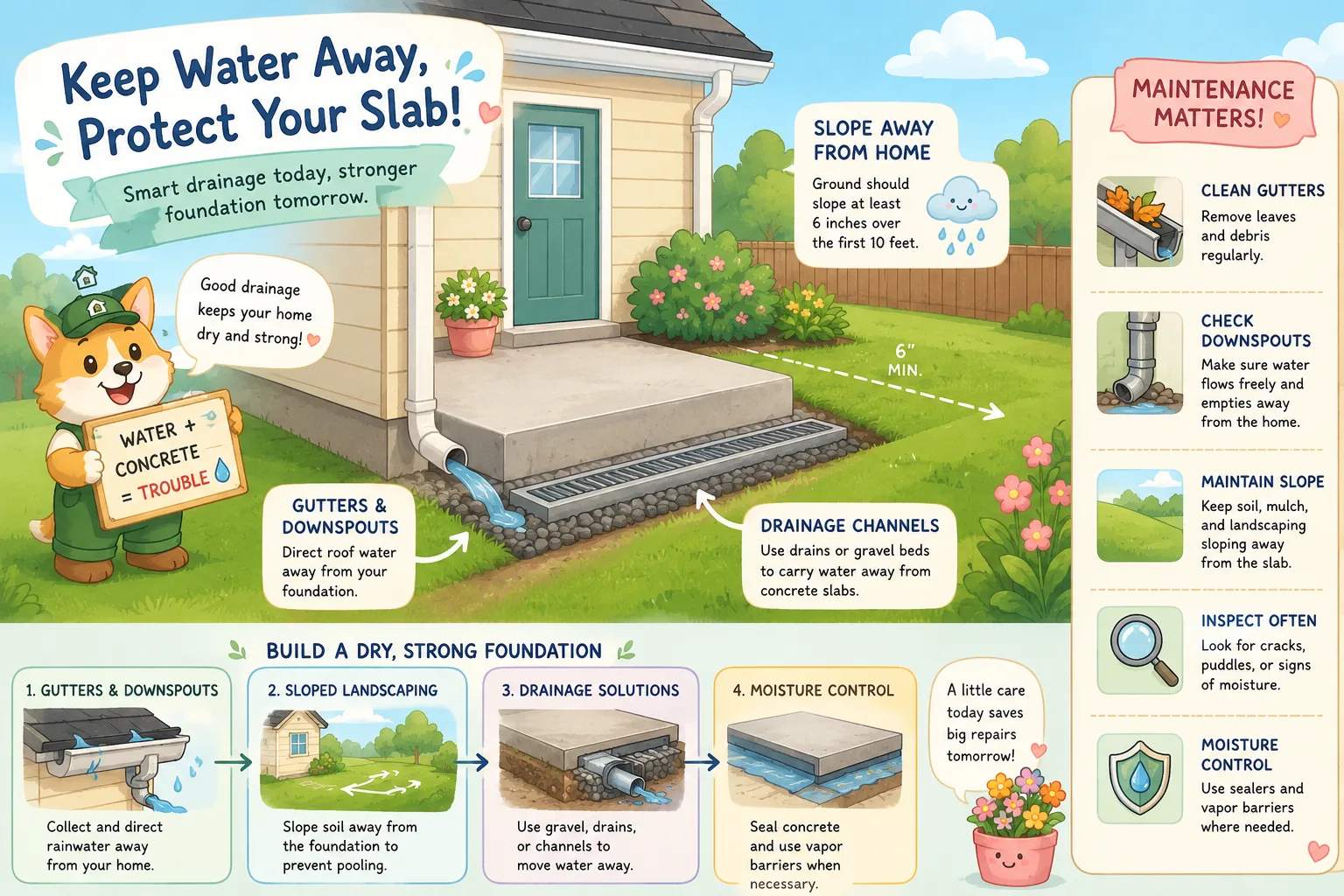
Water management is the single most important factor in preventing slab settlement. Gutters should direct water several feet away from concrete surfaces and foundations. Downspout extensions, splash blocks, and proper grading dramatically reduce erosion risk.
Avoid allowing sprinklers to oversaturate soil near slabs. Constant moisture weakens supporting soil and accelerates movement. Fix leaking outdoor faucets and underground plumbing promptly before hidden washout develops.
Soil Stabilization and Moisture Control
Maintaining consistent soil moisture helps minimize expansion and contraction cycles, especially in clay-heavy areas. Sudden drying after heavy saturation causes dramatic soil shrinkage beneath slabs.
Tree management also matters. Large roots should be monitored carefully near sidewalks, patios, and driveways. Root barriers sometimes help redirect growth away from vulnerable concrete areas.
Periodic inspections catch small problems before they become major structural repairs. Tiny cracks and minor settlement are much easier; and cheaper; to fix early.
Conclusion
Uneven concrete slabs rarely happen overnight. They’re usually the result of years of soil movement, erosion, moisture problems, or poor support beneath the slab. The concrete simply reveals what’s already happening underground. That’s why successful repairs focus on both the slab itself and the conditions underneath it.
Minor unevenness can often be corrected with DIY solutions like self-leveling compounds or grinding. Moderate settlement usually responds well to mudjacking or polyurethane foam injection. Severe structural failure may require full replacement and deeper soil stabilization work.
The key is choosing the right solution for the actual cause of the problem. Fixing drainage, stabilizing soil, and preventing water intrusion often matter more than the lifting method itself. A properly repaired and maintained slab can remain stable for decades, while a rushed cosmetic fix may fail within a few seasons.
Concrete may seem simple on the surface, but beneath every uneven slab is a story about soil, water, pressure, and time. Understanding that story helps you make smarter repair decisions and protect your property for the long haul.
FAQs
1. Can uneven concrete slabs be repaired without replacement?
Yes. Many uneven slabs can be repaired using mudjacking, polyurethane foam injection, grinding, or self-leveling compounds. Replacement is usually only necessary when the slab is severely cracked or structurally compromised.
2. How long does concrete leveling last?
The lifespan depends heavily on soil stability and drainage conditions. Polyurethane foam repairs may last 20 years or longer under stable conditions, while mudjacking often lasts 5 to 15 years.
3. Is foam leveling better than mudjacking?
Foam leveling is lighter, faster-curing, and more precise than mudjacking. Mudjacking is generally cheaper but adds more weight beneath the slab. The best option depends on soil conditions, budget, and slab type.
4. What causes concrete slabs to sink?
Common causes include soil erosion, poor compaction, water intrusion, expansive clay soil, freeze-thaw cycles, and tree root activity.
5. How much does it cost to level an uneven concrete slab?
Most leveling projects cost between $500 and $3,000, depending on the slab size and repair method used.