
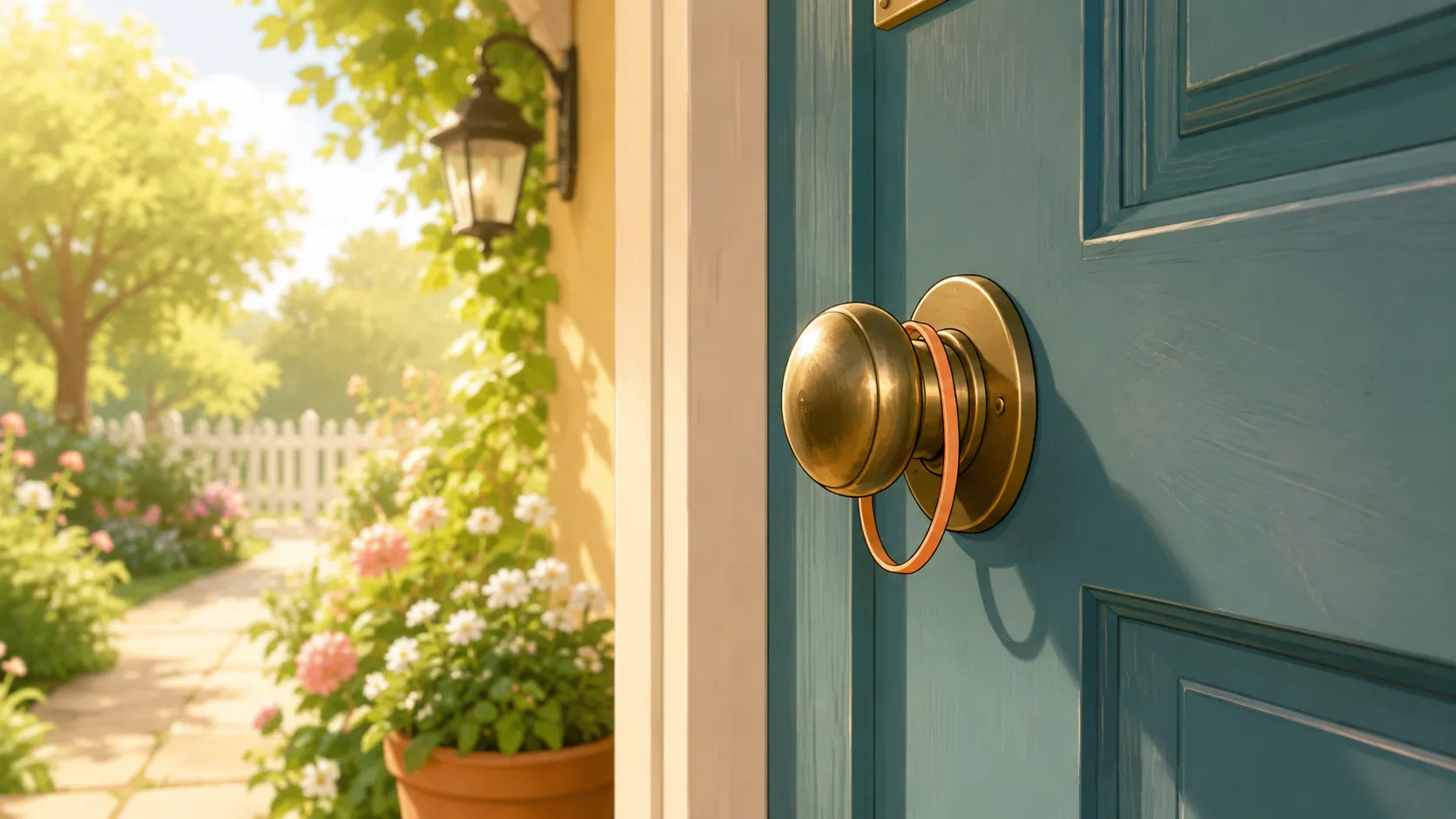
People have turned ordinary household objects into clever problem-solving tools for decades, but few tricks are as oddly fascinating as putting a rubber band on a door knob. At first glance, it sounds like one of those internet myths that spreads through social media without much explanation. You’ve probably seen videos, strange warnings, or clickbait headlines telling people to “put a rubber band on your door tonight.” Naturally, curiosity kicks in. Is it a security hack? A parenting trick? A way to stop noise? Or is it just another exaggerated online rumor?
The truth is much more practical than mysterious. Homeowners, parents, renters, and even maintenance workers sometimes use rubber bands on door knobs for surprisingly useful reasons. This simple trick can help stop doors from latching, reduce noise, prevent accidental lockouts, and even assist with temporary childproofing measures. While it’s definitely not a replacement for proper locks or safety devices, it has earned a reputation as one of those low-cost “why didn’t I think of that?” household hacks.
Recent online discussions and home-improvement articles have fueled renewed interest in this technique. Fact-checking sites like have even investigated viral claims surrounding rubber bands on door handles because so many people were searching for explanations. Some claims turned out to be exaggerated or unproven, but the practical uses remain very real.
Before you stretch the nearest rubber band across your door handle, it helps to understand exactly how this method works, why homeowners use it, when it can actually help, and when you should absolutely avoid relying on it. Let’s break down the surprisingly useful world of the humble rubber-band door trick.
The Origin of the Rubber Band Door Knob Trick
The rubber-band-on-the-door-knob trick did not begin as some secret survival technique or hidden security code. In reality, it came from ordinary household problem-solving. Families discovered that stretching a rubber band across the latch of a door could stop the latch from catching. That meant the door could close softly without locking or fully latching shut. Simple problem, simple solution. It’s the kind of practical hack that spreads naturally because people love inexpensive fixes that actually work.
Things changed dramatically once social media got involved. Suddenly, mysterious videos and dramatic posts began suggesting that rubber bands on doors were linked to burglars, hidden signals, or emergency protection methods. Some posts even warned homeowners to be on alert if they noticed rubber bands attached to their front doors. That sparked confusion and fear online. Fact-checkers later investigated many of these claims and found that most lacked evidence or context.
Despite the online panic, the practical uses continued gaining popularity. Homeowners appreciated how easy the trick was to use during moving days, grocery unloading, or when trying not to wake sleeping children. Think of it like duct tape for doors; not glamorous, but surprisingly effective when used correctly.
The internet often turns everyday hacks into urban legends, and this trick is a perfect example. One person uses it to keep a noisy bedroom door quiet, another person films it, and suddenly thousands of viewers assume it’s some hidden life-saving secret. In reality, most people who use rubber bands on door knobs are simply looking for convenience.
How the Rubber Band Door Trick Actually Works

At the heart of this trick is the door latch itself. Most standard doors use a spring-loaded latch bolt that extends into the strike plate on the door frame when the door closes. That little angled metal piece is what keeps the door shut. Normally, turning the knob retracts the latch so the door can open.
The rubber band changes that behavior by keeping the latch compressed. Homeowners usually wrap the band around one knob, twist it into an “X” shape over the latch, and stretch it around the opposite knob. The tension from the rubber band pushes against the latch and prevents it from extending outward. As a result, the door closes without actually locking into place.
The “X” Method Explained
The “X” method is the most common version because it holds the latch securely while keeping the band in place. Imagine the rubber band acting like a tiny assistant constantly holding the latch inward. Instead of clicking shut every time the door closes, the door simply swings gently against the frame.
This becomes extremely useful in high-traffic situations. If you’re carrying laundry baskets, groceries, furniture, or cleaning supplies, repeatedly turning a door knob becomes annoying fast. The rubber band creates hands-free movement between rooms. Some homeowners also use it temporarily during painting or repair projects when doors need to remain easy to open.
Home-improvement articles and online discussions frequently mention noise reduction as another major advantage. Since the latch never fully engages, the sharp clicking sound disappears almost completely.
That said, the trick only works properly when the rubber band is thick and strong enough. Thin rubber bands can snap under tension, especially after prolonged use. And if the band slips out of place, the latch simply returns to normal operation.
The Practical Benefits of Using Rubber Bands on Door Knobs
One reason this hack has survived for years is because it solves several annoying household problems at once. It’s inexpensive, easy to set up, and requires no tools. In a world filled with expensive smart-home gadgets, there’s something refreshing about fixing a problem with a five-cent rubber band.
Preventing Accidental Lockouts
One of the most practical uses involves preventing lockouts. Some doors automatically lock when closed, especially in apartments or older homes. If you step outside without keys; even for a moment; you could find yourself stuck outside. The rubber band keeps the latch from catching, which prevents the accidental lock.
This is especially helpful during activities like gardening, carrying trash outside, or unloading groceries from a car. Nobody wants to stand outside barefoot realizing the door locked behind them.
Easier Movement Through Doors
The trick also creates smoother movement through busy spaces. Think about moving boxes during a relocation. Every trip through a door becomes frustrating when you need to twist a handle while balancing heavy items. The rubber band effectively turns the door into a push-open entryway.
Noise Reduction
Many parents appreciate the noise-reduction benefits. Traditional door latches create surprisingly loud clicking sounds, especially late at night. A sleeping toddler can wake up from what feels like the tiniest noise. By keeping the latch compressed, the door closes almost silently. Articles discussing this trick often highlight its usefulness in homes with babies or light sleepers.
Temporary Convenience During Cleaning or Repairs
During cleaning projects or renovations, doors often need to remain partially accessible. Constantly opening and closing doors while carrying tools or supplies wastes time. The rubber-band method simplifies the process temporarily without requiring permanent changes to the hardware.
Like many clever hacks, its strength lies in convenience rather than sophistication.
Childproofing and Pet-Related Uses
Parents are constantly searching for affordable ways to make homes safer, and the rubber-band trick occasionally enters childproofing conversations. Some families use rubber bands to make knobs harder for toddlers to grip or operate. Others use the latch-holding method to allow easier movement through rooms while supervising children.
How Parents Use the Trick Around Toddlers
Certain DIY parenting forums suggest wrapping rubber bands around door knobs to create resistance or awkward grip angles for small hands. The idea is that toddlers struggle with slippery or modified handles. Some discussions also mention pairing rubber bands with socks or fabric covers to reduce grip.
While this may slow some children temporarily, kids are surprisingly determined problem-solvers. Any parent who has watched a toddler defeat a “childproof” cabinet lock knows exactly what that means. Rubber bands alone should never be trusted as a primary safety method.
Helping Pets Move Between Rooms
Pet owners sometimes use the trick for convenience rather than safety. A slightly unlatched door allows cats or dogs to nudge doors open more easily. This can help pets move freely without scratching at doors constantly.
For example, some cat owners keep bedroom doors softly closed without fully latching them, giving pets access during the night while still reducing noise. It’s a small adjustment, but it can dramatically reduce late-night scratching and whining.
Why It Should Never Replace Real Childproof Locks
The biggest mistake homeowners make is assuming this hack equals actual childproofing. It doesn’t. Professional childproof locks are designed specifically to withstand pulling, twisting, climbing, and repeated use. Rubber bands are temporary tools, not engineered safety products.
Parenting communities often recommend proper knob covers, magnetic locks, or door alarms instead of relying solely on makeshift solutions.
Common Misconceptions About Door Knob Safety
The internet has a talent for transforming ordinary objects into symbols of danger. Rubber bands on door knobs became one of those strange online mysteries surrounded by rumors and warnings. Some posts claimed criminals used rubber bands to mark occupied homes. Others suggested the bands were part of elaborate burglary tactics.
The reality is much less dramatic.
Viral Rumors About Criminal Activity
Fact-checking investigations found little evidence supporting many of the viral claims circulating online. In most cases, rubber bands found on doors were likely harmless, accidental, or unrelated to criminal behavior.
That doesn’t mean homeowners should ignore suspicious activity altogether. If anything unusual appears around your property repeatedly, caution makes sense. But assuming every rubber band signals criminal intent creates unnecessary panic.
Social media thrives on mystery because fear spreads faster than ordinary explanations. “Helpful household hack” simply doesn’t attract clicks like “Secret burglar warning homeowners must know.”
Why the Trick Is Not a Security Device
Another misconception is believing the rubber-band trick somehow strengthens security. In truth, it often does the opposite. Since the latch remains disengaged, the door becomes easier to open.
Some articles mention psychological comfort from hearing the band move if someone touches the door. But that’s not meaningful protection. A rubber band cannot replace deadbolts, smart locks, security cameras, or reinforced strike plates.
Treat the trick as a convenience tool; not a defense mechanism.
Risks and Downsides of the Rubber Band Method
Like many DIY hacks, this method works best in moderation. Problems arise when people depend on it too heavily or use it in unsafe situations.
Security Concerns
The biggest downside is obvious: an unlatched door is less secure. If the latch cannot engage, the door may open with a simple push. That’s why experts strongly discourage using this trick on exterior doors or any entry point requiring reliable security.
Damage to Paint or Hardware
Rubber bands also deteriorate over time. Heat, sunlight, and tension weaken the material. Cheap rubber bands may snap unexpectedly or leave sticky residue behind. In some cases, prolonged friction can mark painted surfaces or metal hardware.
Imagine leaving a rubber band stretched across a door for weeks during hot weather. Eventually, it becomes brittle like dried spaghetti. Once it breaks, the latch suddenly resumes normal operation, which could create confusion or accidental lockouts.
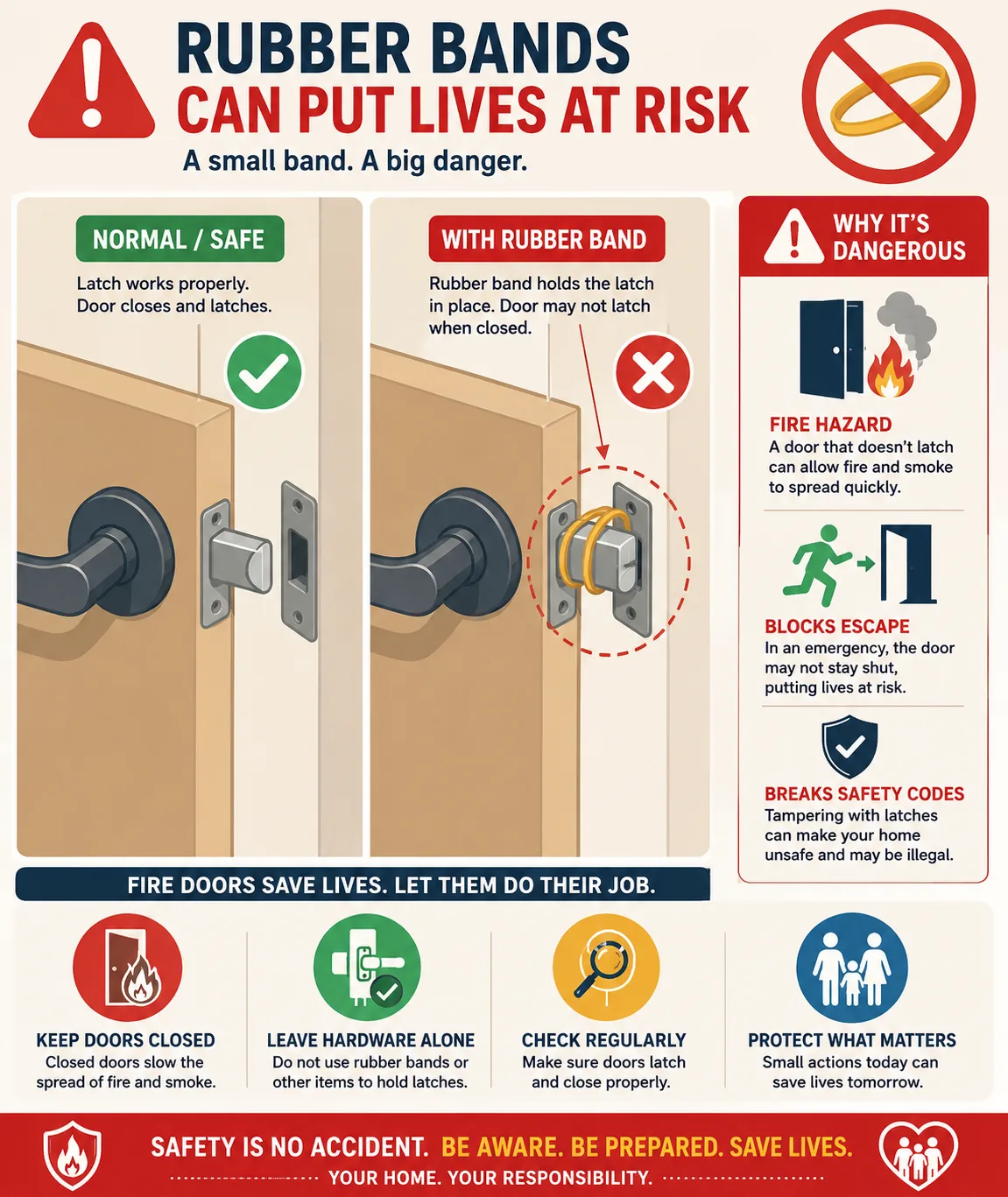
Fire Safety and Emergency Risks
Fire safety is another important consideration. Certain doors are designed to close and latch automatically during emergencies. Preventing proper latching could interfere with safety measures or containment systems.
Interior fire doors, apartment hallway doors, and garage-entry doors should never be modified casually. Convenience should never override emergency protection.
Better Alternatives for Long-Term Use
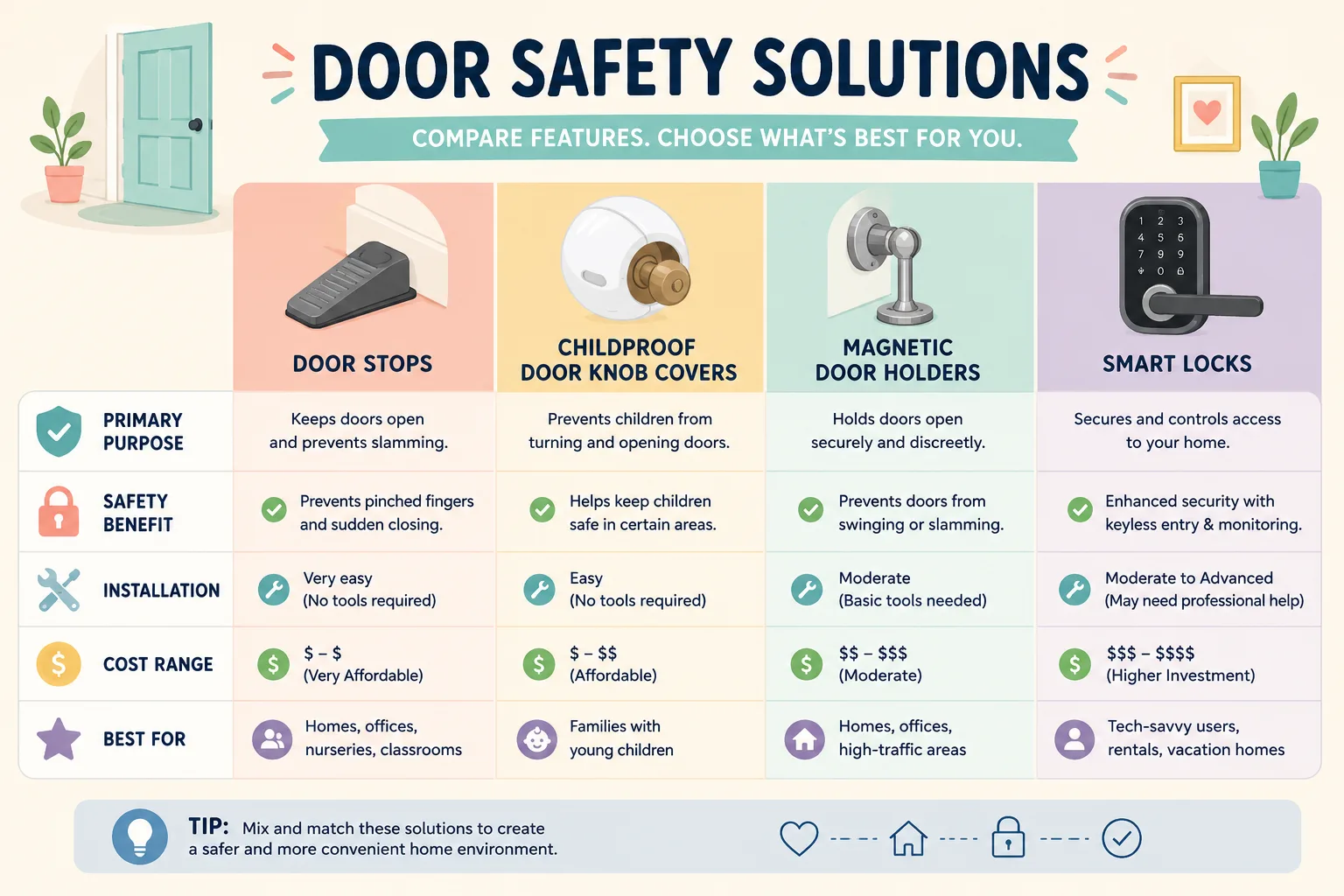
While rubber bands work temporarily, better long-term solutions exist for most situations. If you regularly struggle with noisy doors, childproofing, or accidental slamming, investing in purpose-built products makes far more sense.
| Problem | Better Alternative | Main Benefit |
|---|---|---|
| Noisy doors | Soft-close door dampers | Quiet operation |
| Childproofing | Door knob covers | Improved safety |
| Doors hitting walls | Door stops | Prevents wall damage |
| Pets needing access | Magnetic door holders | Controlled movement |
| Frequent lockouts | Smart locks or keypad locks | Keyless convenience |
Childproof Door Covers
These plastic covers require coordinated squeezing and turning motions that toddlers struggle to perform. They’re inexpensive, widely available, and significantly safer than makeshift hacks.
Magnetic Door Stops
Magnetic stops hold doors open securely without interfering with the latch mechanism. They work especially well during cleaning, moving, or ventilation projects.
Soft-Close Door Accessories
Soft-close systems reduce slamming and latch noise more effectively than rubber bands. They also avoid the security compromises associated with disabling the latch entirely.
Sometimes the best solution is the one specifically engineered for the job.
When You Should Avoid Using Rubber Bands on Door Knobs
There are clear situations where this trick simply should not be used. Exterior doors top the list. Any entrance protecting your home needs full locking capability at all times. Disabling the latch for convenience creates unnecessary risk.
You should also avoid the method around young children if the door leads to hazardous areas like staircases, pools, garages, or storage rooms containing chemicals or tools. A temporary DIY trick is no substitute for proper childproof hardware.
Shared buildings present another concern. Apartment doors, office doors, and fire-rated doors often have safety requirements that depend on proper latching mechanisms. Tampering with them could violate building rules or reduce emergency protection.
Finally, avoid using old or weak rubber bands for extended periods. Broken bands can create unexpected problems, especially if people assume the latch is still disengaged when it is not.
The trick works best as a short-term convenience tool; not a permanent modification.
Conclusion
The idea of putting a rubber band on a door knob sounds strange until you understand the logic behind it. What began as a simple household convenience hack evolved into an internet curiosity surrounded by myths, rumors, and viral speculation. Underneath all the online mystery, though, the explanation is surprisingly practical.
Homeowners use rubber bands on door knobs primarily to stop doors from latching, reduce noise, prevent lockouts, and improve temporary convenience. Parents and pet owners sometimes experiment with the method as part of broader home-management strategies, although it should never replace genuine safety products. The trick works because it manipulates the latch mechanism directly, creating easier movement through doors without engaging the lock.
At the same time, this method comes with limitations and risks. It weakens security, can interfere with safety systems, and should never be treated as a permanent fix. Like using a butter knife as a screwdriver, it’s clever in a pinch but not ideal for long-term use.
Sometimes the most interesting household hacks are the simplest ones. A rubber band may look insignificant, yet in the right situation, it becomes an unexpectedly useful little tool hanging quietly from a door knob.
FAQs
1. Why do people put rubber bands on door knobs?
Most people use rubber bands on door knobs to keep doors from latching shut. It helps prevent lockouts, reduces noise, and makes it easier to move through doors when carrying items.
2. Does the rubber band trick improve home security?
No. In most cases, it actually reduces security because the latch cannot fully engage. It should never replace proper locks or security devices.
3. Can rubber bands help with childproofing?
They may temporarily make knobs harder for toddlers to operate, but they are not reliable childproofing solutions. Professional childproof locks are much safer.
4. Is it safe to leave a rubber band on a door permanently?
It is not recommended. Rubber bands weaken over time, may snap unexpectedly, and can interfere with proper door function and safety systems.
5. What is the correct way to place the rubber band on the door knob?
Most people wrap the band around one knob, twist it into an “X” shape across the latch, and stretch it around the opposite knob so the latch remains compressed.