
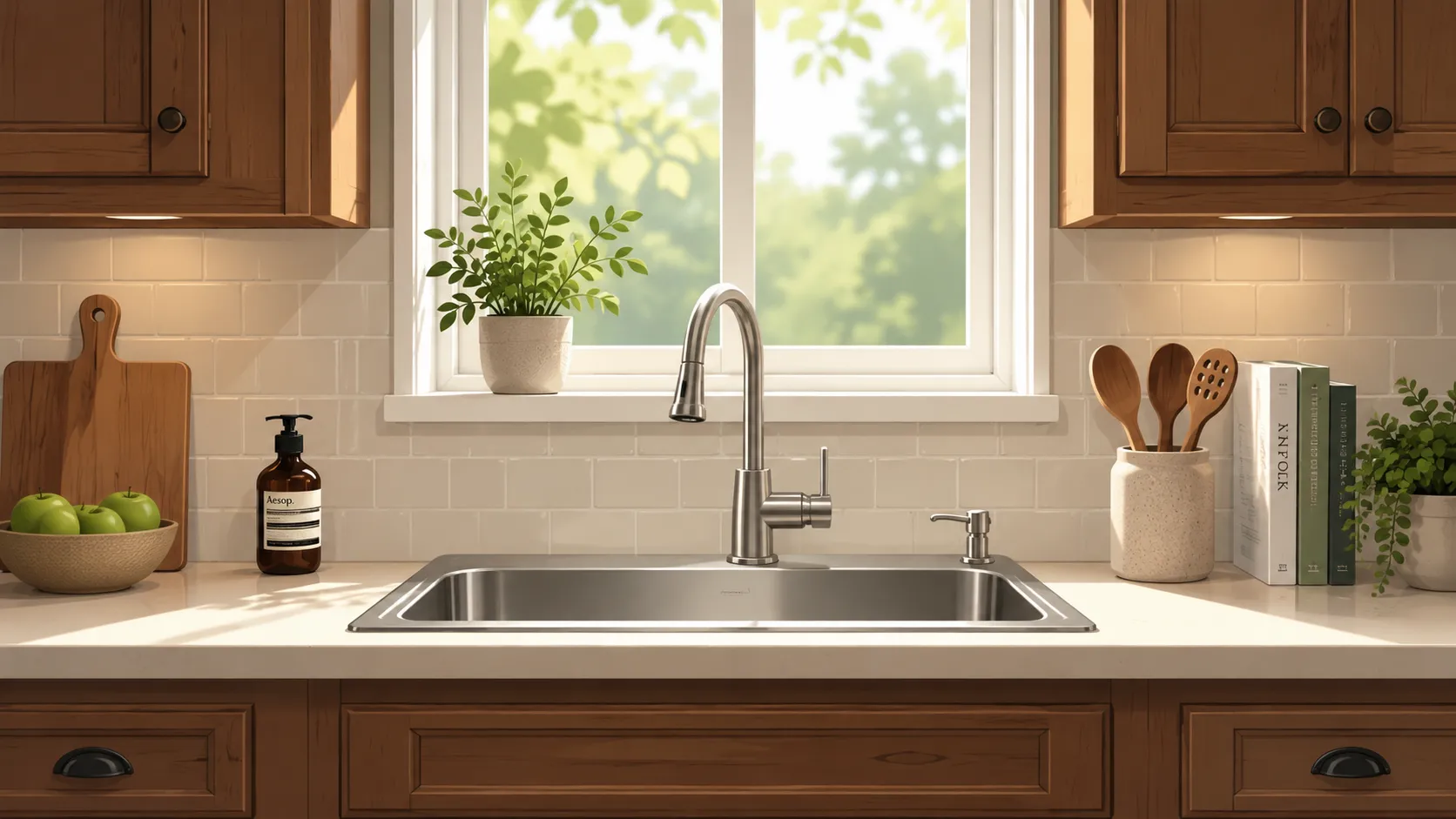
Choosing a kitchen sink sounds simple until you actually start shopping. Suddenly, you’re staring at dozens of dimensions, bowl configurations, cabinet requirements, mounting styles, and faucet compatibility charts that seem written in another language. One sink looks beautiful but won’t fit your cabinet. Another fits perfectly but steals precious counter space. Before long, you realize the kitchen sink is not just a bowl for washing dishes; it’s the hardworking engine of the entire kitchen.
The good news? Once you understand standard kitchen sink sizes and how they relate to cabinetry, workflow, and daily habits, picking the right one becomes dramatically easier. Whether you’re remodeling a compact apartment kitchen or designing a spacious chef-style layout, the size of your sink influences everything from cleaning efficiency to countertop usability. A sink that’s too small becomes frustrating every single day. A sink that’s too large can overwhelm the kitchen and reduce prep space. Like a well-fitted suit, the perfect sink should feel naturally balanced.
Recent kitchen design data shows that 30-inch to 33-inch kitchen sinks remain the most commonly installed residential sizes, while deeper 9-inch and 10-inch basins continue growing in popularity among homeowners looking for improved functionality. At the same time, double-bowl sinks are still favored in homes where multitasking and handwashing cookware are daily routines.
This guide breaks down everything you need to know about standard kitchen sink sizes, including single vs double sink dimensions, cabinet compatibility, depth considerations, installation clearances, and faucet matching strategies that actually work in real kitchens.
Understanding Standard Kitchen Sink Dimensions
Why Kitchen Sink Size Matters More Than Most People Think
A kitchen sink is one of the most frequently used fixtures in the entire house. Think about it for a second. You rinse vegetables there, soak pans there, wash dishes there, fill pots there, and sometimes even thaw frozen food there. It’s the kitchen equivalent of a busy intersection where everything passes through eventually. That’s why choosing the correct sink size affects not just aesthetics, but daily convenience and comfort.
Most homeowners focus heavily on countertop materials, cabinet finishes, or appliances while underestimating the impact of sink dimensions. Yet the sink influences workflow more than almost any other kitchen component. A sink that’s too narrow forces awkward angles when cleaning pans. A basin that’s too shallow splashes water everywhere. An oversized sink can eat up prep space and make smaller kitchens feel cramped.
Modern kitchen design trends also influence sizing decisions. Deeper workstation sinks and large single-bowl designs have become increasingly popular because they accommodate oversized cookware and simplify cleanup. According to recent sizing guides, standard residential kitchen sinks generally range between 22 and 36 inches wide, with depths commonly falling between 8 and 10 inches.
The “right” sink size ultimately depends on four major factors:
- Cabinet width
- Countertop space
- Cooking habits
- Preferred workflow
A person who cooks elaborate meals daily may prioritize a deep single basin for stockpots and baking trays. Someone with limited space may prefer a compact double bowl to maximize organization. There’s no universal perfect answer; only the best fit for your kitchen lifestyle.
The Most Common Kitchen Sink Widths Used Today
Kitchen sink widths have become surprisingly standardized over time, which makes planning renovations easier. In most residential kitchens, the most commonly installed sink widths include:
| Sink Type | Common Widths | Typical Depth |
|---|---|---|
| Small/Prep Sink | 15–24 inches | 7–8 inches |
| Standard Single Bowl | 24–36 inches | 8–10 inches |
| Standard Double Bowl | 33–36 inches | 8–10 inches |
| Farmhouse Sink | 30–36 inches | 9–10 inches |
The industry “sweet spot” is typically the 30-inch or 33-inch sink because these dimensions balance usability with cabinet compatibility. A 33-inch model is especially popular because it fits well within the standard 36-inch sink base cabinet commonly used in modern kitchen construction.
Front-to-back dimensions are also fairly standardized. Most kitchen sinks measure between 20 and 22 inches from front edge to back edge, designed specifically to fit standard 24-inch deep countertops while leaving adequate space behind the sink for faucet installation and backsplash clearance.
These standard dimensions exist for a reason. Manufacturers optimize sizes around cabinetry, plumbing spacing, and ergonomic comfort. It’s a bit like designing parking spaces; everything works smoothly when dimensions follow predictable patterns.
Standard Single Bowl Kitchen Sink Sizes
Typical Dimensions for Single Bowl Sinks
Single bowl sinks have exploded in popularity over the last decade, and it’s easy to see why. They’re simple, spacious, and incredibly versatile. Instead of dividing the sink into separate compartments, the entire basin becomes one large workspace capable of handling oversized cookware with ease.
The most common single bowl kitchen sink sizes include:
| Sink Width | Typical Cabinet Requirement | Bowl Depth |
|---|---|---|
| 24 inches | 27-inch cabinet | 8–10 inches |
| 30 inches | 33-inch cabinet | 9–10 inches |
| 33 inches | 36-inch cabinet | 9–10 inches |
| 36 inches | 39-inch cabinet | 10 inches |
Among these, the 30-inch single bowl sink is widely considered the standard choice for average kitchens because it offers enough room for large pans without monopolizing countertop space. Homeowners who frequently cook with oversized roasting pans or baking sheets often prefer the 33-inch or 36-inch models.
One major advantage of a single bowl layout is uninterrupted cleaning space. Large cookware fits naturally without awkward positioning. There’s no center divider getting in the way when washing sheet trays or cutting boards. If double sinks are like having two small parking spaces, single bowl sinks feel more like a spacious garage.
Another often-overlooked benefit is easier installation. Single bowl sinks typically involve simpler plumbing layouts compared to double bowl configurations, especially when garbage disposals are involved.
Best Uses for Large Single Bowl Designs
Large single bowl sinks work particularly well in modern kitchens where multitasking happens across the countertop rather than inside separate basins. Many homeowners now rely heavily on dishwashers, meaning the sink’s primary role shifts toward food prep and oversized item cleaning instead of segregating washing and rinsing tasks.
Deep single bowl sinks are especially useful for:
- Washing baking trays
- Filling stockpots
- Cleaning air fryer baskets
- Soaking cookware
- Hiding dirty dishes temporarily
That last point matters more than people admit. A large basin visually conceals clutter better than divided sinks, helping kitchens appear cleaner between loads of dishes.
Workstation sinks have further expanded the appeal of large single bowls. Many now include sliding accessories like cutting boards, drying racks, strainers, and colanders. These transform the sink into a multifunction prep station that saves counter space rather than consuming it.
Still, large single bowl sinks aren’t perfect for everyone. Households that regularly handwash dishes may miss the separation provided by dual basins. That’s where double bowl sinks continue to shine.
Standard Double Bowl Kitchen Sink Sizes
Common Double Sink Dimensions
Double bowl sinks remain one of the most practical choices for busy kitchens because they support multitasking naturally. One side can hold dirty dishes while the other stays available for rinsing vegetables or draining pasta. It’s the kitchen equivalent of having two workstations instead of one.
The most common double bowl sink dimensions include:
| Double Sink Type | Common Width | Typical Cabinet Size |
|---|---|---|
| Compact Double Bowl | 30 inches | 33-inch cabinet |
| Standard Double Bowl | 33 inches | 36-inch cabinet |
| Large Double Bowl | 36–42 inches | 39–45-inch cabinet |
The industry standard remains the 33-inch by 22-inch double bowl sink, particularly in residential kitchens. This size offers enough room for two functional basins while fitting comfortably inside a standard 36-inch sink cabinet.
Double sinks are especially beneficial for households without heavy dishwasher reliance. They allow simultaneous soaking, rinsing, and prep tasks without constant rearranging. Some homeowners even dedicate one basin entirely to food prep and the other to cleanup.
Interestingly, double sinks often create better organization habits. The physical separation encourages cleaner workflows and reduces countertop clutter.
50/50 vs 60/40 vs 70/30 Bowl Configurations
Not all double bowl sinks are evenly divided. Bowl ratios dramatically influence functionality, and choosing the wrong split can lead to frustration later.
Here’s how the common configurations compare:
| Configuration | Description | Best For |
|---|---|---|
| 50/50 | Equal-sized bowls | Balanced multitasking |
| 60/40 | One larger basin | Mixed cookware washing |
| 70/30 | One dominant basin | Large cookware users |
A 50/50 sink offers symmetry and equal versatility. Both basins can comfortably handle similar tasks, making them ideal for homes that regularly handwash dishes.
A 60/40 sink provides a compromise between spaciousness and separation. One basin handles large cookware while the smaller side remains available for rinsing or garbage disposal use.
The 70/30 configuration leans heavily toward large cookware accommodation while still retaining a secondary compartment for multitasking.
Many homeowners eventually discover they rarely use both bowls equally. That’s why offset layouts have become increasingly popular in newer kitchen remodels.
Choosing Sink Sizes Based on Cabinetry
Minimum Cabinet Width Requirements
One of the biggest mistakes homeowners make is assuming sink dimensions directly match cabinet dimensions. They don’t. Cabinet size requirements always exceed actual sink width because installation hardware, mounting flanges, support rails, and clearance space all consume room.
A common rule of thumb is:
Your sink cabinet should generally be at least 3 inches wider than the sink itself.
For example:
| Sink Width | Recommended Cabinet |
|---|---|
| 24-inch sink | 27-inch cabinet |
| 30-inch sink | 33-inch cabinet |
| 33-inch sink | 36-inch cabinet |
| 36-inch sink | 39-inch cabinet |
This surprises many homeowners during remodels. A 33-inch sink sounds like it should fit inside a 33-inch cabinet, but interior cabinet dimensions are smaller than exterior measurements due to side walls and support framing.
Reddit renovation discussions frequently highlight this confusion, especially when homeowners discover their cabinet’s interior width is much narrower than expected.
Why a 33-Inch Sink Often Needs a 36-Inch Cabinet
Cabinet manufacturers measure base cabinets from the outside edges, not the usable interior opening. Once you subtract side panels, mounting structures, and hardware clearances, interior width shrinks significantly.
That’s why a 33-inch sink commonly requires a 36-inch cabinet.
Additional space is necessary for:
- Mounting clips
- Sink flanges
- Plumbing alignment
- Garbage disposal clearance
- Structural support rails
Ignoring these allowances is one of the fastest ways to create installation headaches. A sink that technically “fits” may still fail during mounting because there’s no room for hardware or plumbing angles.
Professional installers often recommend leaving even more clearance when possible because tight installations complicate repairs later.
Countertop Space and Workflow Planning
A larger sink sounds attractive until you realize it eliminates prep space. Kitchen design is always a balancing act between utility and breathing room.
In compact kitchens, oversized sinks can dominate the visual layout and reduce functional counter area dramatically. Smaller kitchens usually benefit from:
- 24-inch to 30-inch sinks
- Compact workstation accessories
- Offset double bowls
- Integrated drainboards
Meanwhile, large kitchens can comfortably support:
- 33-inch to 36-inch sinks
- Farmhouse designs
- Deep single bowls
- Wide faucet spreads
The goal is harmony. Think of your countertop like a desktop workspace. If the monitor is too large, there’s nowhere left for your keyboard and notes.
Deep vs Shallow Kitchen Sinks
Advantages of Deep Sinks
Deep sinks have become one of the strongest trends in modern kitchen design. Standard depths used to hover around 7–8 inches, but today many homeowners actively seek 9-inch and 10-inch deep basins.
The appeal is obvious. Deep sinks:
- Hide dirty dishes better
- Reduce splashing
- Accommodate large pots
- Improve soaking capacity
- Enhance modern aesthetics
For busy households, deeper sinks feel luxurious because they increase usable volume dramatically. Washing large roasting pans suddenly becomes easier instead of awkward.
Farmhouse sinks especially embrace deeper basin designs, often reaching 10 inches or more. These sinks create a dramatic visual centerpiece while offering enormous functionality.
Still, deeper isn’t automatically better for every user.
When Shallow Sinks Work Better
Shallow sinks, usually around 7–8 inches deep, remain practical in many kitchens. They’re especially useful for:
- Elderly homeowners
- Shorter users
- Accessibility-focused kitchens
- Small spaces
A very deep sink forces users to bend lower repeatedly, which can create back strain over time. This issue becomes surprisingly noticeable during long cleanup sessions.
Shallower sinks also preserve more under-sink storage space because plumbing occupies less vertical room.
Some homeowners compromise by selecting medium-depth 8.5-inch basins, balancing ergonomics with capacity. It’s similar to choosing mattress firmness; comfort depends heavily on personal habits and physical needs.
Installation Considerations and Clearance Requirements
Undermount vs Drop-In Space Requirements
Installation style affects sizing requirements more than most homeowners realize.
Drop-in sinks sit on top of the countertop with visible rims. They’re generally easier to install because the rim supports the sink’s weight directly.
Undermount sinks, meanwhile, attach beneath the countertop for a cleaner appearance. These require stronger support systems and more precise cutouts.
Undermount installations typically demand:
- Additional cabinet reinforcement
- Precise template alignment
- Strong mounting hardware
- Water-resistant countertop materials
Drop-in sinks are often more forgiving during retrofits because they conceal rough cutout edges.
Plumbing and Garbage Disposal Clearance
The sink itself is only part of the equation. Plumbing takes up substantial cabinet space behind and below the basin.
Experts note that plumbing and electrical components commonly occupy the rear 3–4 inches of cabinet depth. This can affect sink compatibility even when overall dimensions appear correct.
Garbage disposals add further complications by consuming additional vertical and horizontal clearance.
Before purchasing a sink, always verify space for:
- Drain lines
- Water supply valves
- Garbage disposals
- Water filtration systems
- Dishwasher connections
Skipping these measurements is like buying a sofa before checking the doorway width.
Faucet Hole Placement and Rear Clearance
Faucet compatibility is another commonly overlooked detail. A beautiful faucet means little if it collides with the backsplash or sprays beyond the basin edges.
Adequate rear clearance is necessary for:
- Faucet handles
- Pull-down sprayers
- Soap dispensers
- Air gaps
- Water filtration taps
Most countertops require at least several inches behind the sink for safe faucet installation.
Large farmhouse sinks sometimes lack pre-drilled faucet holes entirely, giving homeowners more flexibility in faucet positioning.
Matching Faucets and Accessories to Sink Size
Faucet Reach and Spout Height
A faucet should feel proportionate to the sink, not oversized like a fire hydrant or tiny like a drinking fountain.
Key faucet considerations include:
| Sink Size | Ideal Faucet Style |
|---|---|
| Small sink | Compact arc faucet |
| Medium sink | Pull-down faucet |
| Large sink | Commercial-style faucet |
Tall faucets pair beautifully with deep sinks because they create comfortable clearance for large cookware. Short faucets work better with shallow sinks to minimize splashing.
Spout reach also matters enormously. Water should land near the center drain area rather than splashing against basin walls.
Accessories That Improve Sink Functionality
Modern sink accessories can dramatically improve workflow without requiring a larger sink footprint.
Popular accessories include:
- Roll-up drying racks
- Integrated cutting boards
- Colanders
- Bottom grids
- Sink caddies
Workstation sinks especially benefit from these additions because they convert the sink area into a flexible prep station.
For smaller kitchens, accessories can compensate for limited counter space by transforming the sink into a multifunction workspace.
Common Kitchen Sink Sizing Mistakes
Many sink problems stem from simple planning mistakes that are entirely avoidable.
The most common issues include:
- Buying based only on appearance
- Ignoring cabinet interior dimensions
- Choosing overly deep basins
- Forgetting faucet clearance
- Sacrificing too much countertop space
- Underestimating plumbing requirements
Another major mistake is assuming all “standard” sinks are interchangeable. Even minor dimensional differences affect cutouts, mounting hardware, and plumbing alignment.
Always measure:
- Cabinet interior width
- Existing cutout size
- Countertop depth
- Rear plumbing clearance
- Faucet spacing
Measure twice. Buy once. That advice applies to sinks just as much as woodworking.
Conclusion
The standard kitchen sink size isn’t a single universal measurement; it’s a range shaped by cabinet dimensions, cooking habits, workflow preferences, and kitchen layout. For most homes, the sweet spot falls between 30 and 33 inches wide, with basin depths around 8 to 10 inches. Single bowl sinks excel at handling oversized cookware and creating streamlined workflows, while double bowl designs continue offering unmatched multitasking flexibility.
Cabinet compatibility matters just as much as sink dimensions themselves. A sink that technically matches the countertop opening may still fail installation if cabinet clearance, plumbing space, or mounting hardware requirements are ignored. That’s why professional installers consistently emphasize planning around the entire system, not just the visible sink.
Deep sinks provide dramatic capacity and modern aesthetics, but shallower basins may feel more ergonomic depending on the user. Faucet sizing, countertop balance, and accessories also play major roles in creating a kitchen that feels both functional and visually cohesive.
At the end of the day, the perfect kitchen sink isn’t necessarily the biggest or trendiest option. It’s the one that quietly makes daily life easier every single time you step into the kitchen.
FAQs
What is the most common kitchen sink size?
The most common residential kitchen sink sizes are 30 inches and 33 inches wide. These sizes balance usability, cabinet compatibility, and countertop space efficiently.
How deep should a kitchen sink be?
Most modern kitchen sinks are between 8 and 10 inches deep. Deeper sinks reduce splashing and handle large cookware better, while shallower sinks improve accessibility and comfort.
Can a 33-inch sink fit in a 33-inch cabinet?
Usually no. A 33-inch sink commonly requires a 36-inch cabinet because installation hardware and cabinet wall thickness reduce interior space.
Are single bowl sinks better than double bowl sinks?
It depends on workflow preferences. Single bowl sinks provide more uninterrupted washing space, while double bowl sinks improve multitasking and dish organization.
What size sink works best in a small kitchen?
Compact kitchens typically work best with 24-inch to 30-inch sinks. These preserve countertop prep space while still offering practical functionality.