
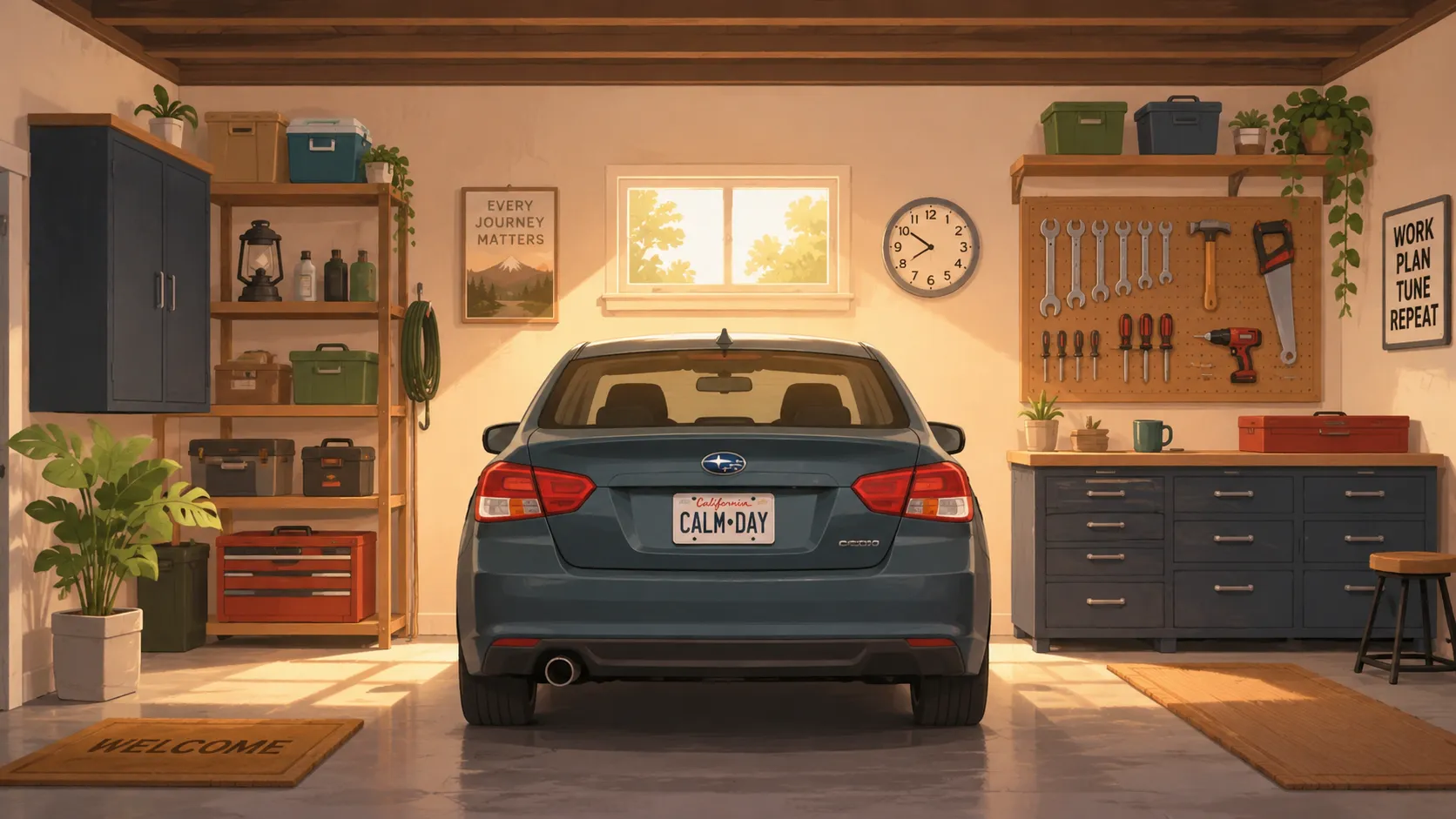
Building a garage sounds simple at first. You just need a space for one car, right? Then reality kicks in. Suddenly, you are thinking about door clearance, storage shelves, bicycles, workbenches, ventilation, garage door tracks, and whether your SUV will actually fit without scraping the walls every morning. A one-car garage may look straightforward from the outside, but smart planning makes the difference between a cramped storage box and a practical, long-lasting space.
Recent industry data shows that the most common standard one-car garage size in North America is 12 feet wide by 20 feet deep, although many homeowners now prefer slightly larger layouts because modern vehicles continue to grow in size. Older garages were designed for compact sedans decades ago, but today’s SUVs, trucks, and crossovers demand more breathing room. That shift has completely changed how homeowners approach garage design.
Before you pour concrete or hire a contractor, understanding garage dimensions, storage needs, clearance requirements, and safety considerations can save you from expensive mistakes later. Think of your garage as a puzzle. Every inch matters. If one piece is ignored, daily use becomes frustrating fast.
Understanding Standard One-Car Garage Dimensions
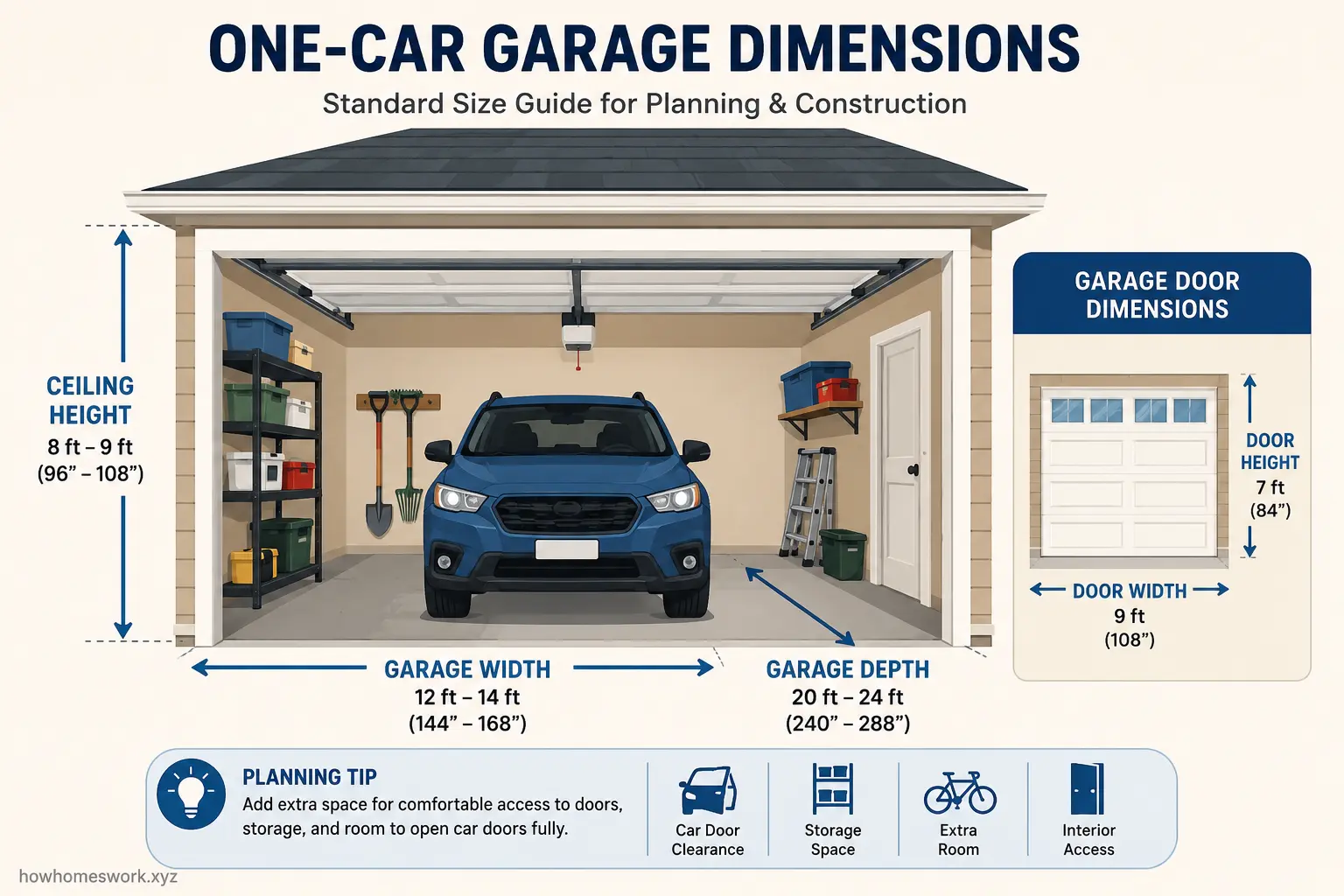
A standard one-car garage is commonly built at 12 feet wide and 20 feet deep, giving homeowners around 240 square feet of usable space. While that sounds spacious on paper, the truth feels different once you park a modern SUV inside and try opening the doors comfortably. The issue is not simply fitting a car into the space. The real challenge is using the garage naturally every day without bumping mirrors, squeezing sideways, or sacrificing all storage possibilities.
Builders today often recommend dimensions closer to 14×24 feet for better flexibility. Why? Because garages have evolved. They are no longer just vehicle shelters. They are workshops, storage centers, mini gyms, hobby spaces, and sometimes even home offices. A garage designed only around the car itself quickly becomes restrictive. It is like buying a closet that only fits your shirts but leaves no room for shoes, coats, or hangers.
The age of the home also plays a major role. Garages built before the 1960s were often significantly smaller because vehicles themselves were narrower and shorter. Modern vehicles now include larger mirrors, wider doors, and taller rooflines. According to recent housing and garage industry reports, many homeowners discover their existing garages technically fit the car but fail practical usability tests like opening doors or unloading groceries comfortably.
When deciding garage dimensions, the smartest approach is thinking beyond the present moment. Will your next vehicle be larger? Will your family need bike storage? Will you eventually add cabinets or shelving? A garage is a long-term investment, and undersizing it creates daily frustration that compounds over years.
Typical One-Car Garage Width and Depth
Garage dimensions are not one-size-fits-all. They vary based on vehicle type, storage expectations, and property limitations. Even though 12×20 feet remains the industry standard, homeowners increasingly move toward wider and deeper garages for better usability.
Standard Width Measurements
A typical one-car garage ranges between 12 and 16 feet wide. At the narrowest end, around 10 feet wide, the garage may technically hold a car but creates major challenges for daily access. Imagine trying to slide out of your vehicle while balancing shopping bags and avoiding wall contact. That is the reality in undersized garages.
Industry experts now recommend a minimum of 12 feet in width for practical comfort. Wider layouts like 14 or 16 feet provide room for shelving, walking paths, and storage cabinets without turning the garage into a maze. Many homeowners regret prioritizing lower construction costs over usability because widening the garage later becomes expensive and complicated.
| Garage Width | Best For | Comfort Level |
|---|---|---|
| 10 ft | Compact cars only | Tight |
| 12 ft | Sedans and small SUVs | Standard |
| 14 ft | SUVs with storage | Comfortable |
| 16 ft | Large vehicles + workspace | Spacious |
Standard Depth Measurements
Depth matters just as much as width. A garage that is too shallow creates problems with garage door clearance, trunk access, and front storage placement. Most one-car garages range from 20 to 24 feet deep.
Modern pickup trucks and SUVs can approach 19 feet in length. That leaves almost no remaining room in a shallow 20-foot garage. You may fit the vehicle inside but lose the ability to store equipment, access the rear hatch comfortably, or walk around the front bumper.
Ceiling Height Recommendations
Ceiling height is often overlooked during garage planning, yet it dramatically affects functionality. Standard garage ceilings are usually 8 to 9 feet high. Taller ceilings create opportunities for overhead storage racks, lifts, and improved ventilation.
If you own taller vehicles like trucks or roof-rack-equipped SUVs, higher ceilings become even more important. Garages with limited height can also interfere with garage door track systems, especially for sectional or overhead doors.
Garage Door Size and Entry Planning
The garage door acts like the gateway to the entire space. You can have perfect interior dimensions, but if the door opening is too narrow or too short, the garage becomes frustrating to use. Most standard single-car garage doors measure 8 to 9 feet wide and 7 feet high.
A 9-foot-wide door is generally preferred today because vehicle mirrors have become wider over time. Trying to squeeze through a narrower opening every day feels like threading a needle repeatedly. Even a few extra inches of width make parking significantly easier and reduce the risk of damaging mirrors or door frames.
Choosing the Right Garage Door Style
Different garage door styles affect space efficiency inside the garage. Traditional up-and-over doors require overhead clearance and can interfere with ceiling storage. Roller doors and sectional doors often maximize usable interior space more effectively.
Homeowners should also think about side entry access. Many garages benefit from an additional side door connecting directly to the backyard or house. This improves convenience and safety, especially during emergencies. Without a secondary access point, entering the garage may require fully opening the main garage door every time, which wastes energy and reduces security.
Smart planning also means considering future technology. Automatic openers, smart garage systems, motion sensors, and insulated doors have become increasingly common. Designing around these features early prevents costly retrofits later.
Clearance Requirements for Vehicles
Here is where many garage designs fail. Homeowners measure only the vehicle itself and ignore the clearance needed around it. A car fitting inside a garage is not enough. You need enough surrounding space to move comfortably.
Experts often recommend at least 2 to 3 feet of side clearance on each side of the vehicle whenever possible. This allows doors to open properly and gives people room to walk around the vehicle naturally.
Side Clearance for Opening Doors
Think about daily life. You are carrying groceries, loading children into car seats, or pulling out sports equipment. Tight side spacing quickly becomes irritating. Some garages technically fit vehicles but make it impossible to fully open doors. That transforms routine parking into a stressful precision exercise.
Modern SUVs and trucks are especially problematic because they are both wider and taller than older vehicles. According to recent housing discussions and homeowner feedback, many newer garages are criticized for feeling too narrow for practical daily parking despite meeting minimum standards.
Front and Rear Clearance Requirements
Front and rear spacing also matter. Ideally, homeowners should leave at least 24 to 36 inches in front of and behind the parked vehicle. This allows access to storage areas, workbenches, and rear hatches.
Without proper rear clearance, opening an SUV hatch inside the garage can become impossible. Likewise, insufficient front spacing may block access to tools, utility equipment, or storage cabinets mounted on the front wall.
Storage Considerations Inside a Single-Car Garage
A garage without storage planning becomes cluttered almost immediately. Even minimalist households accumulate tools, seasonal decorations, sports equipment, and maintenance supplies over time. The challenge is balancing vehicle space with organization.
Wall Storage Solutions
Wall-mounted shelving is one of the most efficient ways to maximize garage storage. Vertical storage keeps floor space open and improves vehicle maneuverability. Pegboards, slat walls, and mounted cabinets help organize frequently used tools while reducing clutter.
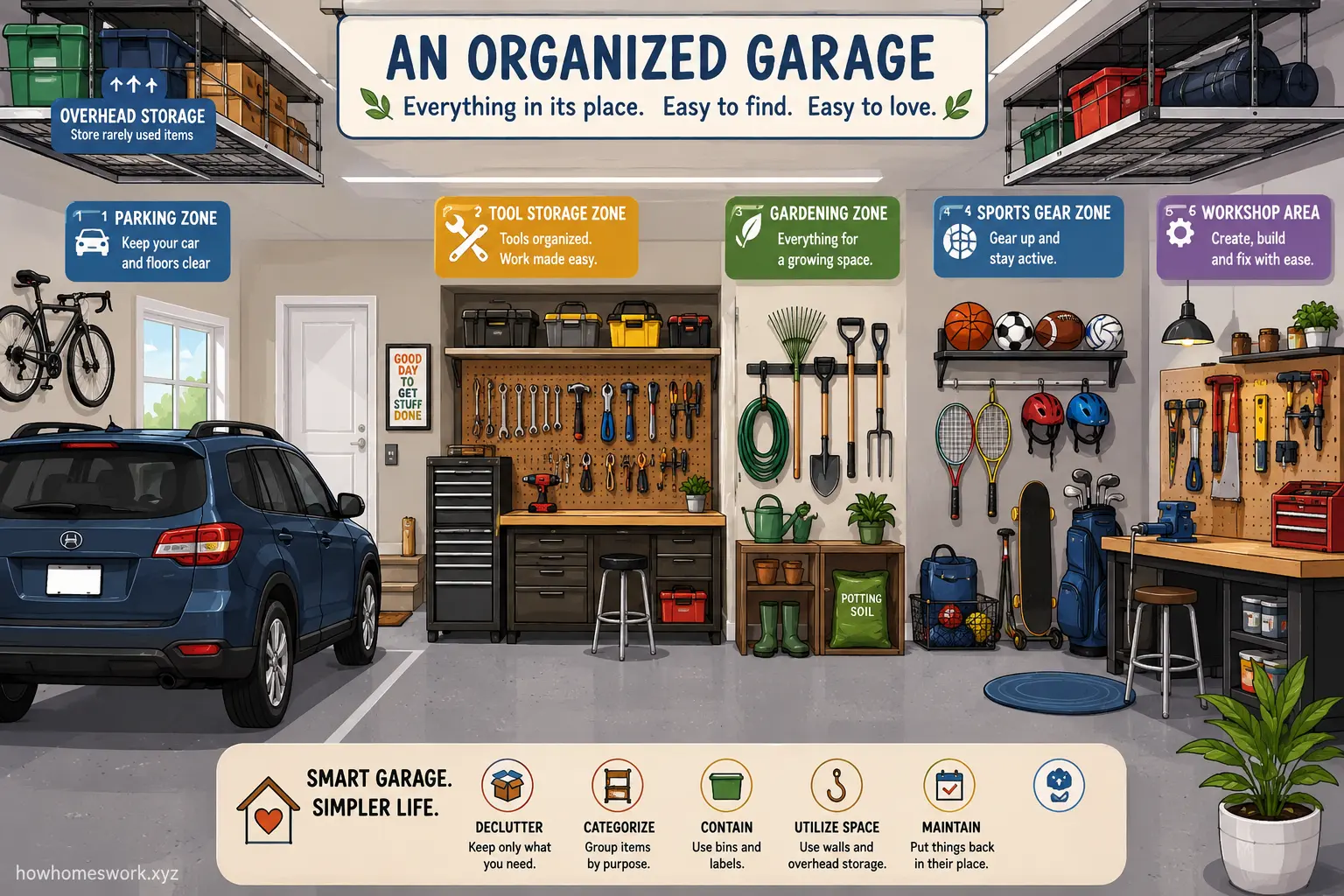
One of the smartest strategies is dividing the garage into functional zones. For example:
- Parking zone
- Tool storage zone
- Gardening equipment zone
- Sports gear zone
This approach prevents the garage from becoming a chaotic dumping ground. Think of the garage like a kitchen. Everything works better when every item has a designated place.
Overhead Storage Options
Overhead storage systems have become increasingly popular because they utilize unused ceiling space. These systems are ideal for storing seasonal items like holiday decorations, camping gear, or luggage.
Still, overhead storage requires careful ceiling planning. Low ceilings or poorly positioned garage door tracks can interfere with rack installations. That is why taller garage ceilings offer significant long-term advantages.
Homeowners should also consider ventilation when adding storage. Blocking airflow with excessive shelving or tightly packed items can trap moisture, encourage mold growth, and create unpleasant odors.
Popular Layout Options for One-Car Garages
The layout determines how functional the garage feels day after day. Even a large garage can feel cramped with poor planning, while a smaller garage can remain highly efficient with smart organization.
Basic Parking Layout
The simplest layout centers the vehicle with open clearance on both sides. Storage stays limited to perimeter walls or ceiling-mounted systems. This design works best for homeowners primarily focused on vehicle protection.
A centered layout also minimizes collision risk because drivers can enter and exit more comfortably. Mirrors remain less vulnerable, and passengers gain easier access.
Workshop and Hybrid Garage Layouts
Many homeowners now combine parking with workshop space. In these hybrid designs, one wall often includes a workbench, tool cabinets, and electrical outlets. The challenge is maintaining enough clearance around the parked vehicle while preserving usable workspace.
A popular hybrid layout includes:
| Area | Purpose |
|---|---|
| Rear Wall | Workbench and tools |
| Side Wall | Shelving and cabinets |
| Ceiling | Overhead storage |
| Center Space | Vehicle parking |
This design creates a balance between functionality and practicality. It transforms the garage into a multi-purpose extension of the home rather than a simple parking enclosure.
Safety and Ventilation Requirements
Garages may seem harmless, but poor ventilation and unsafe electrical planning can create serious hazards. Vehicle exhaust, fuel vapors, chemicals, and heat buildup all require careful management.
Airflow and Exhaust Ventilation
Proper ventilation reduces carbon monoxide buildup and improves air quality. Attached garages especially require strong airflow systems because fumes can seep into living spaces.
Ventilation options include:
- Wall vents
- Exhaust fans
- Ridge vents
- Window ventilation
- Insulated airflow systems
Climate also affects ventilation needs. Hot climates require stronger airflow management to reduce heat accumulation, while humid environments need moisture control to prevent mold growth.
Fire Safety and Electrical Planning
Garages often contain flammable materials like gasoline, paint, oils, and cleaning chemicals. Fire-resistant drywall, properly grounded outlets, and safe electrical wiring are critical.
Many homeowners underestimate power needs during initial construction. Later, they discover insufficient outlets for tools, chargers, refrigerators, or workshop equipment. Planning electrical systems early prevents extension-cord overload and improves safety significantly.
Lighting also deserves careful consideration. Dim garages increase accident risks and reduce usability. Bright LED lighting with motion sensors has become a common upgrade because it improves visibility while saving energy.
Common Mistakes to Avoid When Designing a Garage
Garage mistakes tend to reveal themselves slowly. At first, everything appears functional. Then frustration builds as storage disappears, parking becomes difficult, and everyday access feels cramped.
Underestimating Vehicle Size
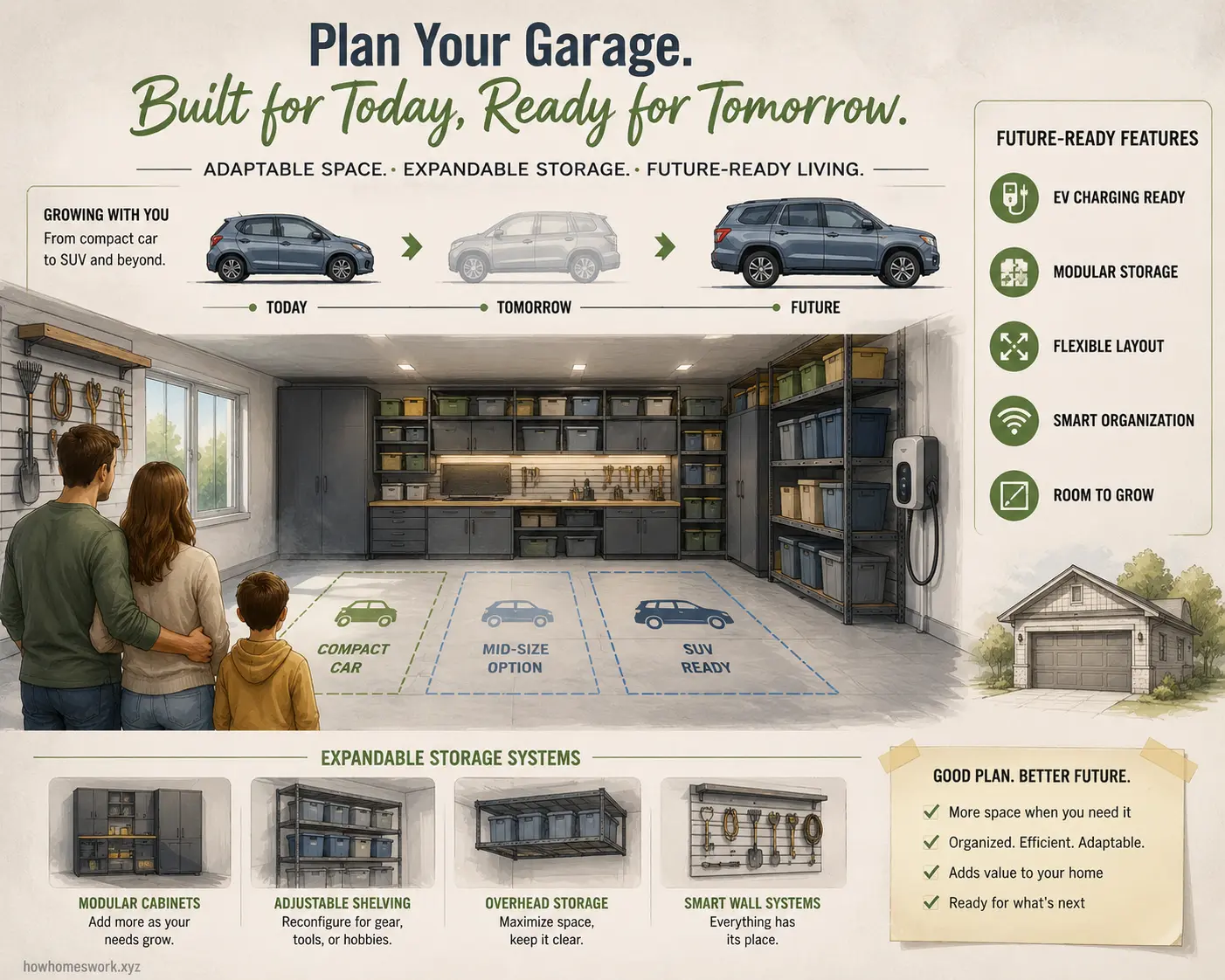
One of the biggest mistakes is designing around the current vehicle only. Cars continue growing larger every year. A compact sedan today may become a full-size SUV tomorrow.
Experts increasingly recommend sizing garages slightly larger than immediate needs because retrofitting later is expensive. A few extra feet during initial construction often cost far less than future expansion projects.
Ignoring Future Storage Needs
Another major mistake is assuming storage demands will stay small. In reality, garages naturally become overflow spaces for household belongings. Without intentional organization, clutter quickly consumes parking space.
Homeowners should plan storage zones from the beginning instead of adding random shelves later. Future-proofing the garage creates better long-term functionality and preserves property value.
Poor door placement is another overlooked issue. Side access doors, electrical panels, water heaters, and utility equipment should never interfere with vehicle movement. Small layout errors can create daily inconvenience for decades.
Conclusion
A standard one-car garage may begin with simple dimensions like 12×20 feet, but true functionality depends on much more than raw measurements. Vehicle clearance, storage planning, ventilation, garage door sizing, ceiling height, and future flexibility all shape how comfortable the space feels in real life. Recent industry trends show homeowners increasingly favor larger garage dimensions because modern vehicles and storage demands continue expanding.
The best garage designs think ahead. They anticipate future vehicles, growing storage needs, and changing household routines. A well-planned garage becomes an extension of the home itself; practical, organized, safe, and adaptable.
If there is one lesson homeowners consistently learn the hard way, it is this: a garage that only barely works today will feel frustrating tomorrow. Building slightly larger, planning smarter layouts, and prioritizing usability create a space that remains functional for years instead of becoming a daily headache.
FAQs
What is the minimum size for a one-car garage?
The practical minimum size is generally around 12 feet wide by 20 feet deep, although smaller garages exist. Anything narrower often creates issues with door clearance and maneuverability.
Can an SUV fit in a standard one-car garage?
Yes, most SUVs can fit inside a standard one-car garage, but clearance may feel tight. Larger SUVs and trucks usually benefit from garages measuring at least 14×24 feet for comfortable access and storage space.
What is the standard garage door size for one car?
Most standard single-car garage doors measure 9 feet wide by 7 feet high. Older homes sometimes use narrower 8-foot-wide doors.
How much clearance should be left around a car in the garage?
Experts recommend leaving roughly 2 to 3 feet of side clearance and 24 to 36 inches at the front and rear whenever possible. This improves comfort, safety, and accessibility.
Is it worth building a larger one-car garage?
In most cases, yes. Slightly larger garages improve usability, increase storage flexibility, and better accommodate future vehicles. Many homeowners later regret choosing minimum dimensions because modern vehicles and household storage needs continue growing.