

Spiders have a strange reputation. Some people see them as harmless little pest controllers, while others react like the house is under attack the second one appears on the wall. No matter which side you fall on, most homeowners agree on one thing: they would rather not share their living room with eight-legged visitors. The good news is that keeping spiders out of your home is usually less about panic and more about prevention. Once you understand why spiders come indoors and what attracts them, the entire problem becomes easier to manage.
According to the , the most effective pest control strategy focuses on prevention first, rather than constantly spraying chemicals after pests appear. That idea applies perfectly to spider prevention because spiders typically enter homes looking for three things: shelter, food, and moisture. If your house quietly offers those comforts, spiders may treat it like an all-inclusive resort.
Before diving into solutions, it helps to understand how spiders think, where they hide, and which prevention methods actually work instead of just sounding clever on social media. Let’s break it all down step by step.
Why Spiders Enter Homes in the First Place
Spiders do not randomly wake up and decide to invade your home out of pure malice. They usually move indoors because your house provides exactly what they need to survive. Think of your home as a warm hotel with endless hiding places and an accidental buffet of insects. If spiders could write online reviews, many homes would probably get five stars for comfort.
One of the biggest reasons spiders enter homes is changing weather. During colder months or periods of extreme heat, spiders look for stable temperatures and protected areas. Cracks in foundations, gaps around doors, and open vents become convenient entry points. Seasonal spider activity often increases in autumn because many species search for warmer environments and mates during that time.
Food is another major factor. Spiders follow insects the way predators follow prey in the wild. If your home has flies, mosquitoes, ants, moths, or other bugs, spiders may move in because they see an opportunity for easy hunting. Many pest experts point out that visible spider activity often indicates another insect issue hiding somewhere in the house. Reddit users discussing persistent spider problems repeatedly noted that spiders thrive where insects are plentiful.
Humidity also matters more than most people realize. Damp basements, bathrooms, laundry rooms, and crawl spaces create attractive environments for many spider species. Moisture supports other insects too, which doubles the attraction. A humid basement is basically a luxury condo for spiders because it combines shelter, darkness, and prey in one place.
Understanding these motivations changes your approach entirely. Instead of treating spiders as random invaders, you begin targeting the conditions that attract them in the first place.
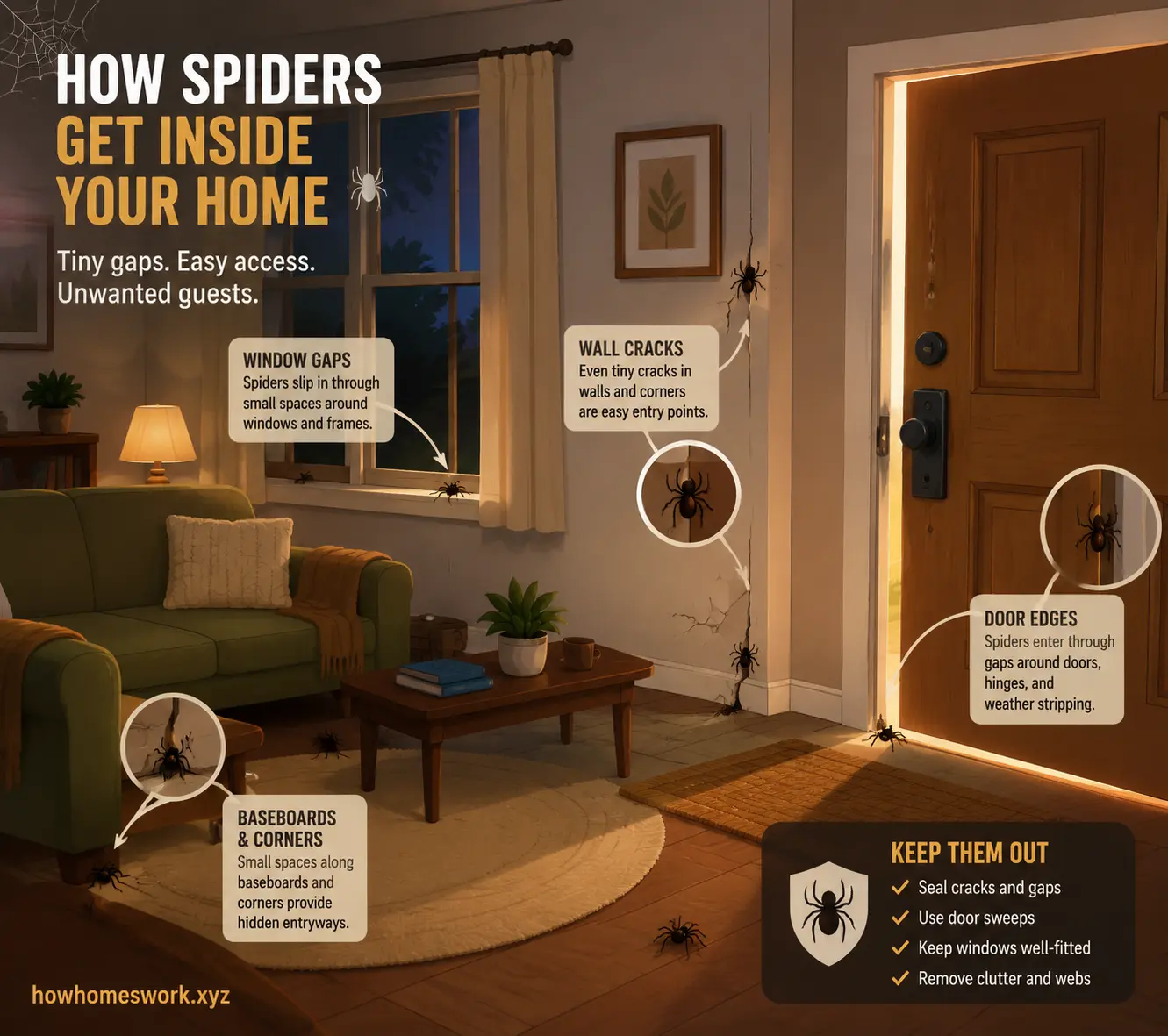
Common Entry Points Spiders Use
If spiders had a favorite hobby, it would probably be squeezing through tiny openings humans barely notice. Most homes unknowingly provide dozens of entrances. You might lock your front door every night, but spiders are perfectly happy slipping through a gap smaller than a pencil eraser.
Doors and windows are among the most common access points. Torn screens, damaged weather stripping, and poorly sealed frames practically invite spiders indoors. Even tiny cracks near utility lines or pipes can become spider highways. The EPA recommends sealing areas where pests enter buildings as one of the core principles of effective pest prevention.
Basements and attics are especially vulnerable because they are often less maintained than the rest of the house. Spiders love quiet places where humans rarely disturb them. Vents without proper mesh covers can become easy access tunnels, while gaps around plumbing create hidden pathways between walls and rooms.
Outdoor clutter is another overlooked problem. Firewood piles, overgrown shrubs, leaf piles, cardboard boxes, and debris near exterior walls provide perfect spider habitats. From there, it is only a short trip indoors. Experts also warn that excessive yard clutter attracts insects, which then attract spiders looking for food.
Outdoor lighting can unintentionally worsen the issue too. Bright lights attract flying insects at night, and spiders quickly notice those opportunities. A porch light may look cozy to humans, but to spiders it can resemble a 24-hour fast-food drive-thru filled with moths and mosquitoes.
Here’s a quick breakdown of common spider entry points:
| Entry Point | Why It Attracts Spiders | Prevention Method |
|---|---|---|
| Cracks in foundation | Easy hidden access | Seal with caulk |
| Torn window screens | Direct indoor entry | Repair or replace screens |
| Garage gaps | Dark sheltered spaces | Install weather stripping |
| Open vents | Protected pathways | Use mesh covers |
| Clutter near walls | Shelter and insect attraction | Keep perimeter clean |
The smaller the opening, the less likely homeowners are to notice it. That is exactly why spiders succeed so often.
Areas Inside the Home Where Spiders Hide
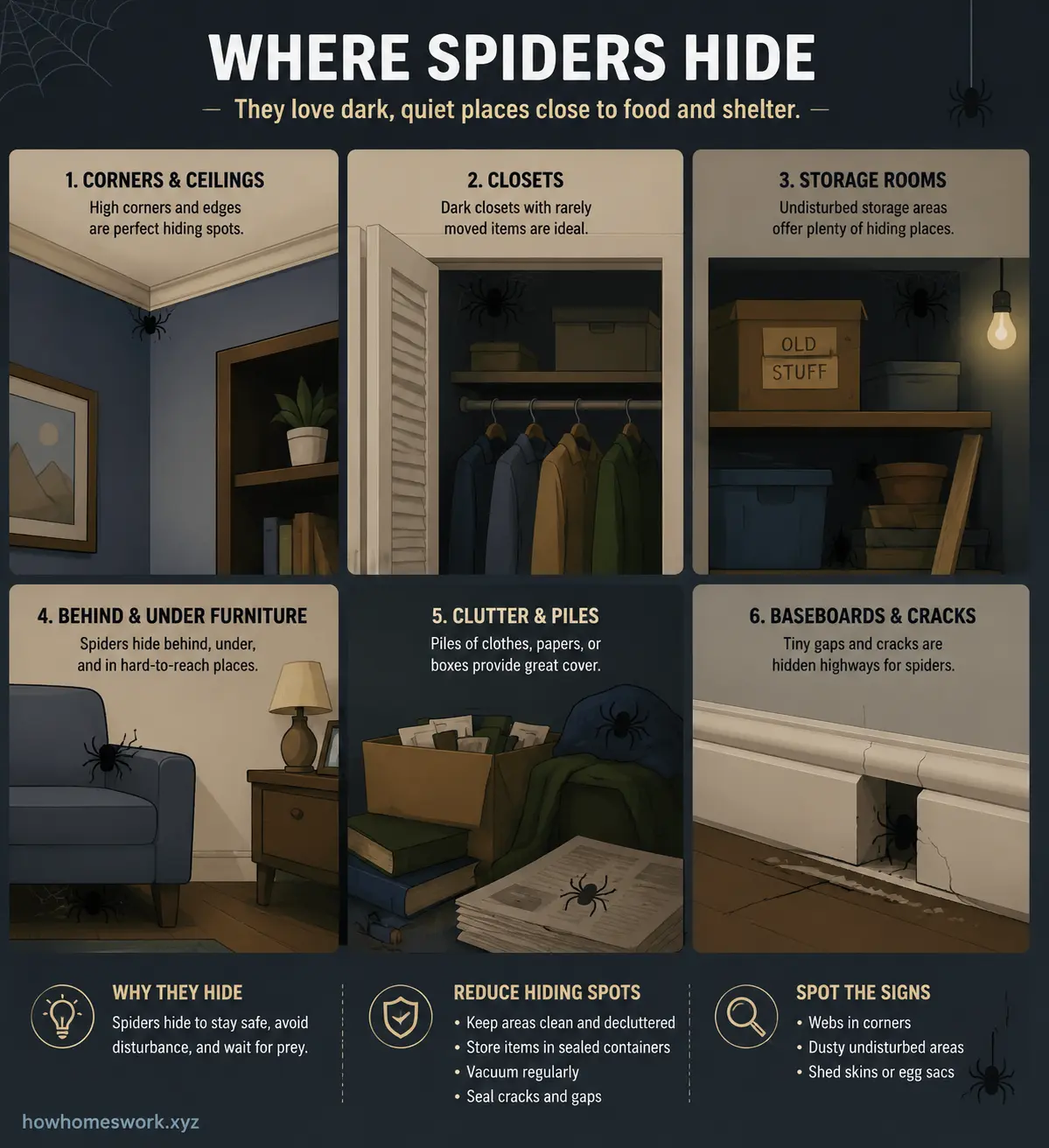
Spiders rarely set up camp in the middle of a brightly lit kitchen counter. They prefer calm, dark, and undisturbed places where they can build webs or hide during the day. If you want to prevent spiders effectively, you need to think like one for a moment.
Closets, basements, garages, attics, storage rooms, and crawl spaces rank among the most common hiding spots. These areas tend to stay quiet for long periods, which gives spiders time to settle comfortably. Cardboard boxes are particularly attractive because they provide texture for web-building and excellent shelter. That old pile of unused holiday decorations in the basement? To spiders, it is prime real estate.
Bathrooms and laundry rooms also attract certain species because of moisture. Condensation and humidity create ideal conditions for insects, and spiders follow those food sources naturally. Some homeowners are surprised to find spiders near sinks, tubs, or water heaters, but from the spider’s perspective, those spaces offer hydration and hunting opportunities.
Furniture placement matters more than people think as well. Large sofas pushed tightly against walls, unused corners, heavy curtains, and cluttered bookshelves create hidden pathways spiders can explore without interruption. If you rarely move furniture or vacuum underneath it, spiders notice.
A consistent cleaning routine disrupts their environment. Vacuuming webs, egg sacs, and corners regularly makes your home far less attractive. The EPA’s Integrated Pest Management approach emphasizes removing shelter and clutter as a key strategy for pest prevention.
Many people assume seeing one spider automatically means infestation, but spiders are generally solitary creatures. Discussions on Reddit frequently highlight that spiders do not behave like ants or termites that form large colonies. Still, repeated sightings often signal conditions that support spider activity, especially abundant insects or neglected spaces.
Natural Spider Deterrents That Actually Work
Natural remedies for spider prevention have exploded in popularity because many homeowners want alternatives to heavy chemical use. Some remedies work reasonably well, while others survive mostly through internet myths and wishful thinking.
Peppermint oil is one of the most widely recommended natural spider deterrents. Many homeowners spray diluted peppermint oil around windows, doors, and corners because spiders appear to dislike strong scents. Citrus oils, eucalyptus, lavender, and tea tree oil are also commonly used. Articles discussing natural prevention methods consistently mention peppermint and citrus as some of the more reliable options.
Vinegar sprays may help too. Mixing equal parts water and white vinegar creates a simple solution that some people use on baseboards and window frames. Cedarwood products are another popular option because certain insects and spiders dislike the scent. Cedar blocks or cedar oil can be useful in closets, storage rooms, and basements.
Certain houseplants may offer limited deterrent effects as well. Mint, lavender, eucalyptus, and basil are frequently mentioned because their strong aromas may discourage spiders while making the home smell pleasant. Of course, plants alone will not magically create a spider-free fortress, but they can support broader prevention efforts.
Here’s a comparison of common natural remedies:
| Natural Deterrent | Potential Effectiveness | Best Use Area |
|---|---|---|
| Peppermint oil spray | Moderate | Windows and corners |
| White vinegar spray | Moderate | Baseboards and entry points |
| Cedar blocks/oil | Moderate | Closets and storage |
| Citrus peels | Mild | Kitchen windowsills |
| Lavender plants | Mild | Indoor decorative areas |
Not every natural trick deserves your trust, though. Conkers and horse chestnuts are famous examples. While some people swear they repel spiders, scientific support remains weak. Experts interviewed in recent articles noted that evidence for conkers is mostly anecdotal rather than proven.
Natural methods work best when paired with proper cleaning, sealing, and insect control. On their own, they are more like adding locks to a door without fixing the broken window beside it.
Chemical Solutions for Spider Prevention
Sometimes natural methods are not enough, especially when spider activity becomes persistent or overwhelming. Chemical treatments can provide stronger and longer-lasting protection when used responsibly.
Residual insecticide sprays are among the most common options. These products create barrier zones around foundations, windows, doors, garages, and baseboards. When spiders cross treated surfaces, they are exposed to the chemical residue. Many professional pest control companies use targeted perimeter treatments because spiders frequently travel along edges and corners.
Glue traps are another practical tool. While they do not solve the root cause, they help monitor activity and reduce visible spider populations. Traps work particularly well in garages, basements, behind furniture, and near storage areas. Some homeowners use traps strategically to identify where spiders are entering most often.
Professional pest control services may become necessary if venomous spiders or severe infestations appear. According to the , black widow and brown recluse spiders can pose health risks in certain regions. Although serious bites remain relatively rare, professional inspection provides peace of mind when dangerous species are suspected.
Integrated Pest Management remains the smartest long-term approach. The EPA specifically recommends combining prevention, monitoring, sanitation, and limited pesticide use rather than relying entirely on chemical spraying. That balanced strategy reduces unnecessary exposure while addressing the underlying conditions attracting spiders.
One mistake homeowners often make is overusing bug bombs or foggers indoors. These products rarely reach hidden spider nesting areas effectively, and they can expose residents and pets to unnecessary chemicals. Spot treatments and targeted prevention usually outperform broad spraying methods.
The most successful spider prevention plans use chemicals carefully as one part of a larger system instead of treating them like a magic cure-all.
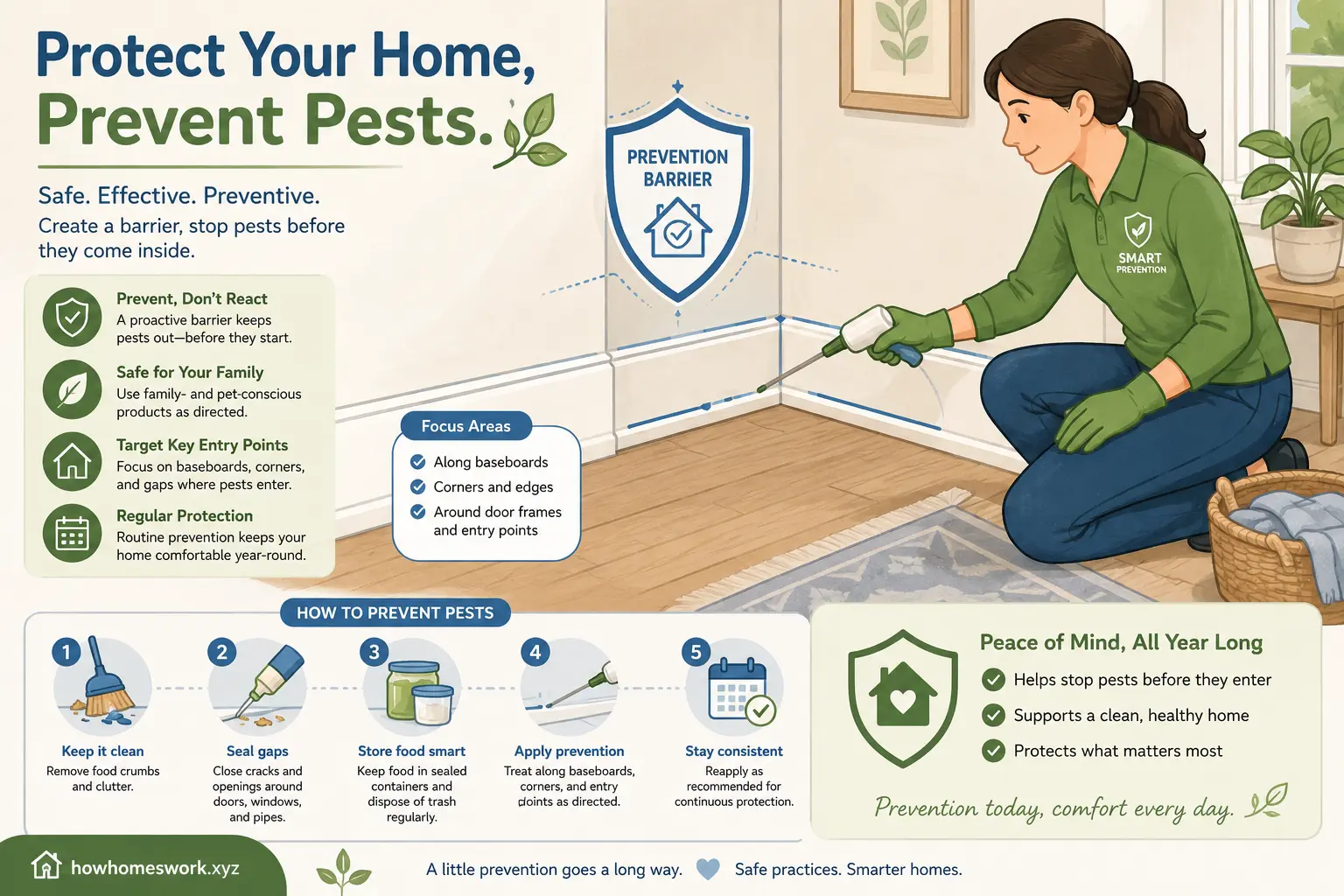
Ongoing Maintenance and Cleaning Tips
Keeping spiders out of your home is not a one-time weekend project. It is more like maintaining a garden. Small habits repeated consistently create the biggest results over time.
Regular vacuuming is one of the simplest and most effective strategies available. Vacuuming removes webs, egg sacs, insects, dust, and hiding opportunities all at once. Pay close attention to corners, behind furniture, ceilings, storage areas, and under beds. A neglected corner can quietly become spider territory before you even notice.
Decluttering matters just as much. Piles of cardboard boxes, stacks of paper, unused clothes, and crowded shelves create perfect shelter. Spiders thrive in environments humans ignore. When you organize and reduce clutter, you eliminate many hiding spaces automatically.
Controlling other insects is equally important. Remember, spiders mainly follow food sources. If mosquitoes, flies, ants, or moths are common indoors, spiders will continue showing up no matter how many webs you remove. The CDC and EPA both emphasize prevention-focused pest control methods such as repairing screens, sealing gaps, reducing moisture, and maintaining cleanliness.
Here are several maintenance habits that make a noticeable difference:
- Repair damaged screens immediately
- Store firewood away from the house
- Keep outdoor vegetation trimmed
- Use dehumidifiers in damp spaces
- Empty trash regularly
- Vacuum corners and ceilings weekly
- Reduce standing water indoors and outdoors
- Avoid leaving outdoor lights on unnecessarily
Humidity control deserves special attention. Basements, bathrooms, and laundry rooms benefit greatly from proper ventilation or dehumidifiers. Moist environments attract insects first, which then attract spiders naturally.
Think of maintenance as creating an environment spiders dislike rather than constantly fighting spiders themselves. Prevention always beats reaction in the long run.
Myths vs Facts About Spider Prevention
Spider prevention is surrounded by myths, internet hacks, and exaggerated claims. Some sound believable, while others belong in the same category as “banana peels cure everything.” Separating fact from fiction helps homeowners focus on methods that genuinely work.
One common myth claims spiders intentionally seek humans to bite them. In reality, spiders usually avoid people whenever possible. The CDC notes that most bites happen because a spider becomes trapped or disturbed accidentally. Spiders are generally defensive rather than aggressive.
Another myth says seeing one spider means a massive infestation exists behind your walls. While repeated sightings may signal underlying issues, spiders are usually solitary. Reddit discussions repeatedly emphasize that spiders do not behave like colony-building pests such as ants or termites.
Some prevention myths sound charming but lack scientific support. Horse chestnuts, conkers, ultrasonic devices, and certain internet “life hacks” often rely more on anecdotal stories than evidence. That does not necessarily mean they never help anyone, but their reliability remains questionable. Experts discussing conkers specifically noted weak scientific backing for the claim.
Here’s a quick myth-versus-fact comparison:
| Myth | Reality |
|---|---|
| Spiders attack humans intentionally | Most avoid human contact |
| One spider means infestation | Spiders are usually solitary |
| Conkers always repel spiders | Evidence is limited |
| Spraying chemicals solves everything | Prevention is more effective |
| Clean homes never get spiders | Even clean homes can attract them |
The biggest fact homeowners should remember is this: spider prevention works best as a layered strategy. Sealing entry points, reducing insects, maintaining cleanliness, managing moisture, and using targeted deterrents together create the strongest defense.
No single hack completely spider-proofs a home forever. Real prevention comes from consistency, observation, and addressing the reasons spiders entered in the first place.
Conclusion
Keeping spiders out of your home is less about declaring war and more about making your house less appealing to them. Once you understand why spiders enter homes, their behavior becomes far more predictable. They want food, shelter, moisture, and quiet hiding places. Remove those conditions, and most spider problems shrink dramatically.
The most effective prevention strategies combine multiple approaches instead of relying on one miracle solution. Sealing cracks, repairing screens, controlling indoor insects, vacuuming regularly, reducing clutter, and managing humidity create a strong foundation for long-term control. Natural repellents like peppermint oil and cedar can provide extra support, while chemical treatments may help in more serious cases.
Integrated Pest Management principles promoted by the EPA focus heavily on prevention rather than excessive pesticide use, and that mindset works especially well for spiders. Consistency matters more than intensity. Small weekly habits usually outperform occasional extreme cleaning sprees or heavy chemical fogging.
At the end of the day, spiders are simply opportunists. If your home becomes difficult to enter and uncomfortable to live in, they will often move somewhere else instead.
FAQs
1. Why do I suddenly have more spiders in my house?
Seasonal weather changes often push spiders indoors seeking warmth and shelter. Increased indoor insects, moisture, or clutter can also attract them.
2. What smell do spiders hate the most?
Peppermint oil is one of the most commonly recommended natural spider deterrents. Citrus, eucalyptus, lavender, and cedar scents may also help discourage spider activity.
3. Can spiders come through air vents?
Yes. Uncovered or poorly protected vents can allow spiders and other pests to enter homes. Installing fine mesh covers can reduce this risk.
4. Are spiders a sign of a dirty house?
Not always. Even clean homes can have spiders because they mainly follow insects, moisture, and shelter opportunities. Clutter and neglected spaces simply increase the chances.
5. Should I kill every spider I see indoors?
That depends on your comfort level and the spider species. Many household spiders are harmless and even help control insects. If venomous species or frequent sightings occur, targeted prevention and professional inspection may be necessary.