
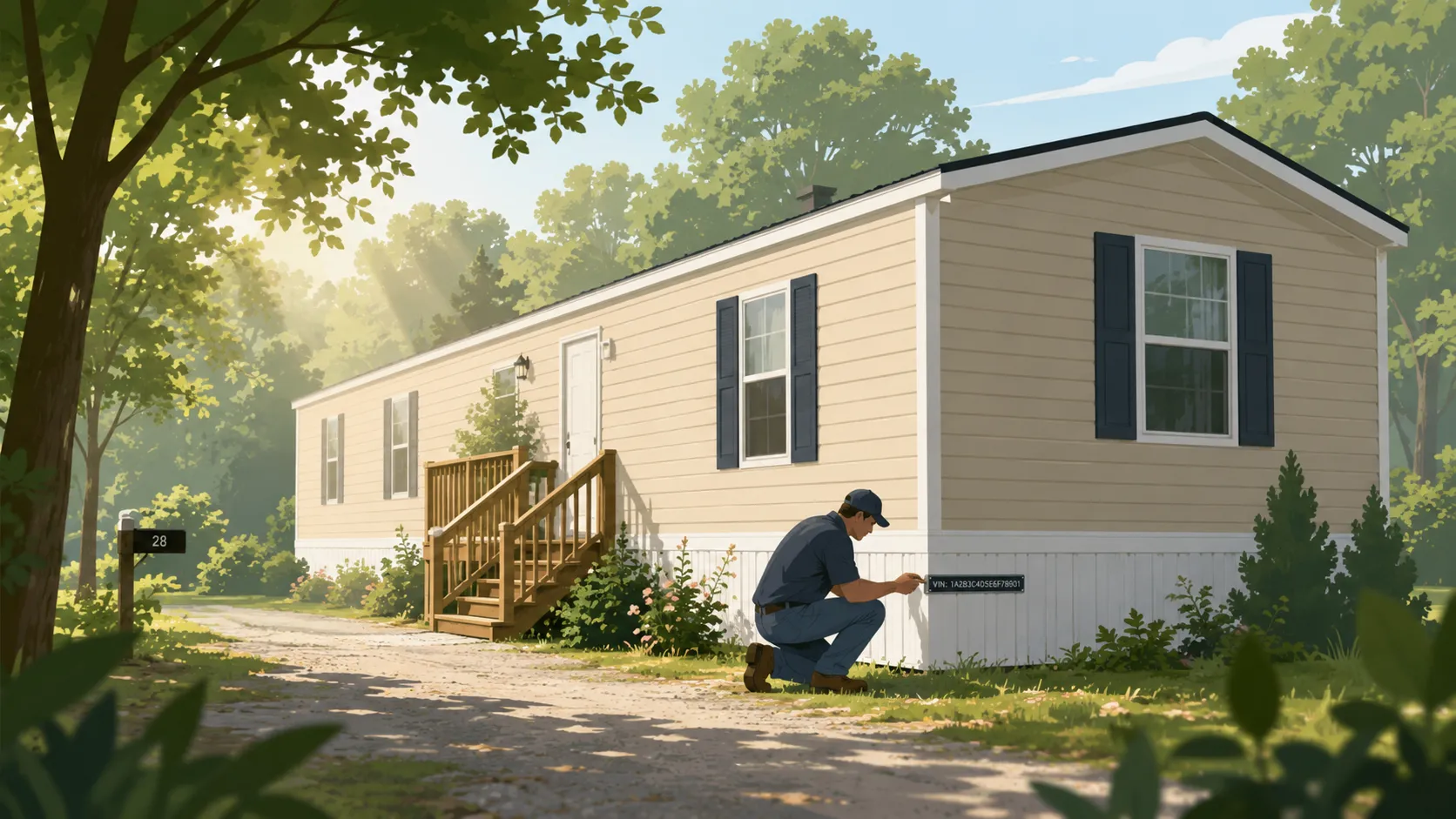
Owning a mobile home can feel a little like owning a puzzle with hidden pieces. Everything looks straightforward until you suddenly need the VIN number. Maybe you are trying to sell the home, refinance it, apply for insurance, verify ownership, or track down original construction details. Then comes the frustrating moment when someone asks, “What’s the VIN?” and you have absolutely no idea where to find it.
The good news is that every manufactured home built according to federal standards has identifying information somewhere on or inside the structure. The challenge is simply knowing where to look and understanding what those numbers actually mean. Unlike a car VIN that is usually visible through the windshield, a mobile home VIN can hide in cabinets, on steel beams, behind panels, or within paperwork that has not been touched in years.
According to the U.S. Department of Housing and Urban Development, manufactured homes built after June 15, 1976, are required to include a serial number and HUD certification label. These identifiers play a critical role in confirming the legitimacy and safety standards of the home. Without them, selling or financing the property can quickly become complicated.
This guide walks you through everything you need to know about finding a mobile home VIN number, understanding how it works, verifying it through official records, and using it to protect your ownership rights and long-term investment.
Understanding What a Mobile Home VIN Is
A mobile home VIN is essentially the fingerprint of the home. It is the one identifier that separates your property from thousands of others manufactured across the country. In many states, the VIN and serial number are treated as the same thing, although the terminology can vary depending on local laws and housing agencies.
Manufactured homes use identification systems that differ from traditional site-built houses. A regular house is tied mostly to the land parcel and street address, but a manufactured home is also treated like a transportable structure. That means it needs a traceable identity for ownership records, transportation, financing, taxation, and safety compliance. Think of the VIN as the home’s DNA strand. It tells inspectors, lenders, and government agencies where the home came from and how it was built.
Difference Between a VIN, Serial Number, and HUD Label
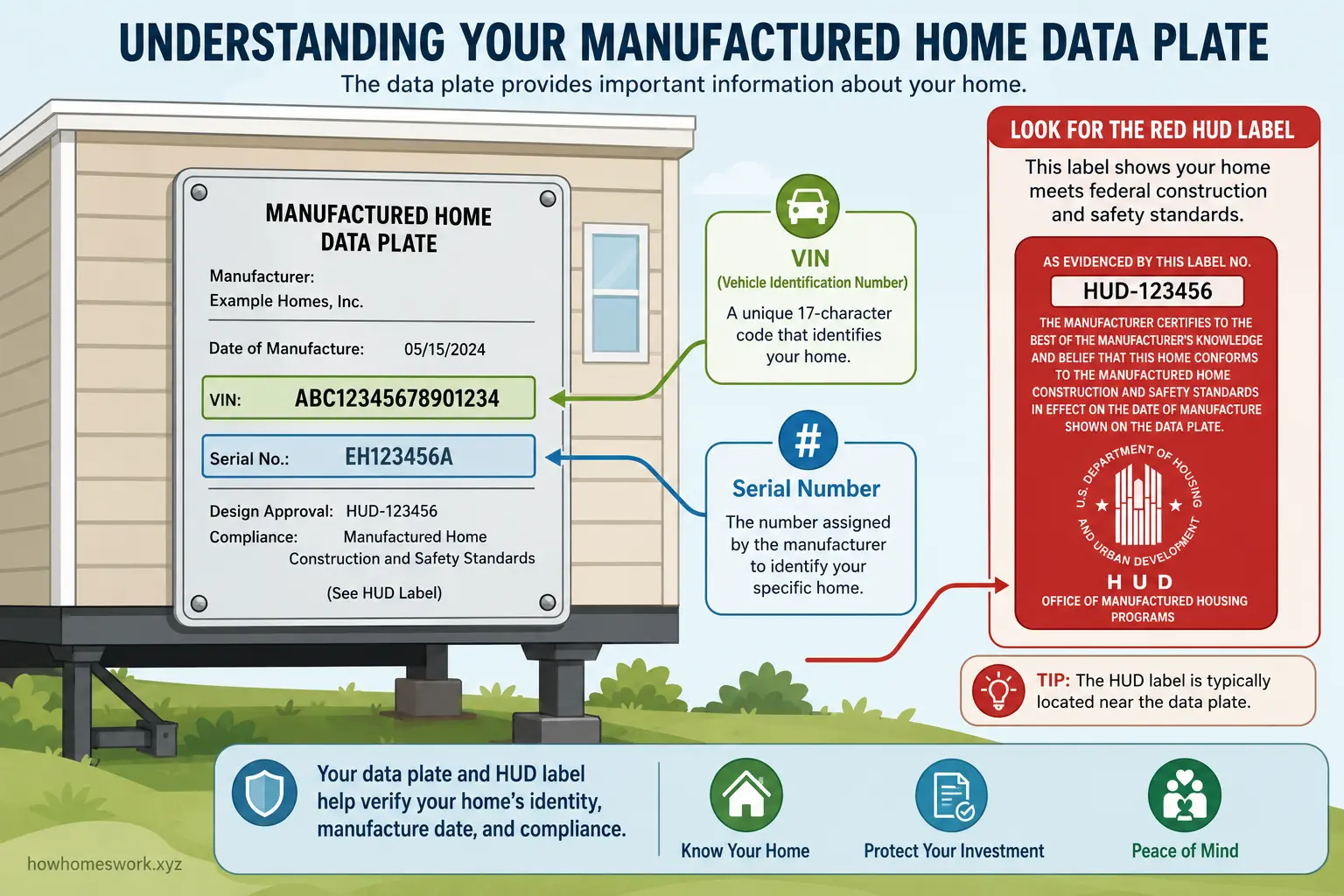
One of the biggest points of confusion involves the terms themselves. People often use VIN, serial number, and HUD label interchangeably, even though they are technically different things.
Here is a simple comparison:
| Identifier | Purpose | Location |
|---|---|---|
| VIN/Serial Number | Identifies the manufactured home | Data plate or steel frame |
| HUD Label | Confirms federal HUD compliance | Exterior rear section |
| Data Plate | Contains construction and certification information | Interior wall, cabinet, or closet |
The HUD label is a small red metal plate attached to the exterior of the home. The serial number is usually stamped into the steel frame and also listed on the interior data plate.
Why Mobile Homes Need Identification Numbers
Imagine trying to register a car without a VIN. That is basically what happens when a mobile home lacks a visible serial number. Lenders, insurers, title companies, and county offices all depend on this identifier to confirm legal ownership and construction standards.
The VIN also helps verify whether the home complies with federal building regulations established by HUD. Since mobile homes are transported and assembled differently than traditional homes, federal oversight is essential for safety standards involving plumbing, electrical systems, fire resistance, and structural stability.
Without a VIN, many financial and legal transactions become difficult or even impossible. That single number can determine whether a refinance closes smoothly or gets delayed for months.
Why the VIN Matters More Than Most Owners Realize
Many homeowners ignore the VIN until they desperately need it. That usually happens during stressful situations like refinancing, inheritance transfers, or selling the property. Suddenly, a number that seemed unimportant becomes the key to unlocking the entire transaction.
The VIN is not just a bureaucratic requirement. It protects your investment and proves the home legally belongs to you. In many ways, it acts like a passport for the structure itself.
Ownership Verification and Title Transfers
When ownership changes hands, state agencies and title companies need proof that the home being sold matches the legal records. The VIN links the physical structure to documents like the title certificate, tax records, and mortgage paperwork.
This becomes especially important with older manufactured homes that may have changed owners multiple times. Sometimes paperwork gets lost, labels are painted over, or renovations cover important identifiers. Reddit discussions from mobile home owners frequently mention situations where missing VINs delayed title retirement or property sales for months.
If you inherit a mobile home from a relative, the VIN becomes critical for probate and ownership transfer. Without it, county officials may struggle to verify the home’s identity, especially if the land and home are titled separately.
Insurance, Financing, and Refinancing Requirements
Lenders and insurance companies view the VIN as a risk management tool. They use it to confirm the age, manufacturer, and compliance status of the home. A missing VIN can trigger red flags because there is no easy way to confirm the property meets HUD safety standards.
Many homeowners discover this issue when trying to refinance. A lender may require the HUD label numbers and serial number before approving the loan. If those labels are missing, homeowners often need verification letters from the Institute for Building Technology and Safety (IBTS).
Insurance companies also use VIN information to determine coverage eligibility. Since different manufacturers used different construction materials and engineering methods, insurers rely on serial numbers to assess replacement costs and risk factors.
Common Locations to Check for the VIN
Finding the VIN can sometimes feel like a treasure hunt. Some homes display it clearly, while others practically hide it behind years of remodeling and wear. The key is knowing the most common locations where manufacturers placed identification information.
Inside the Home on the Data Plate
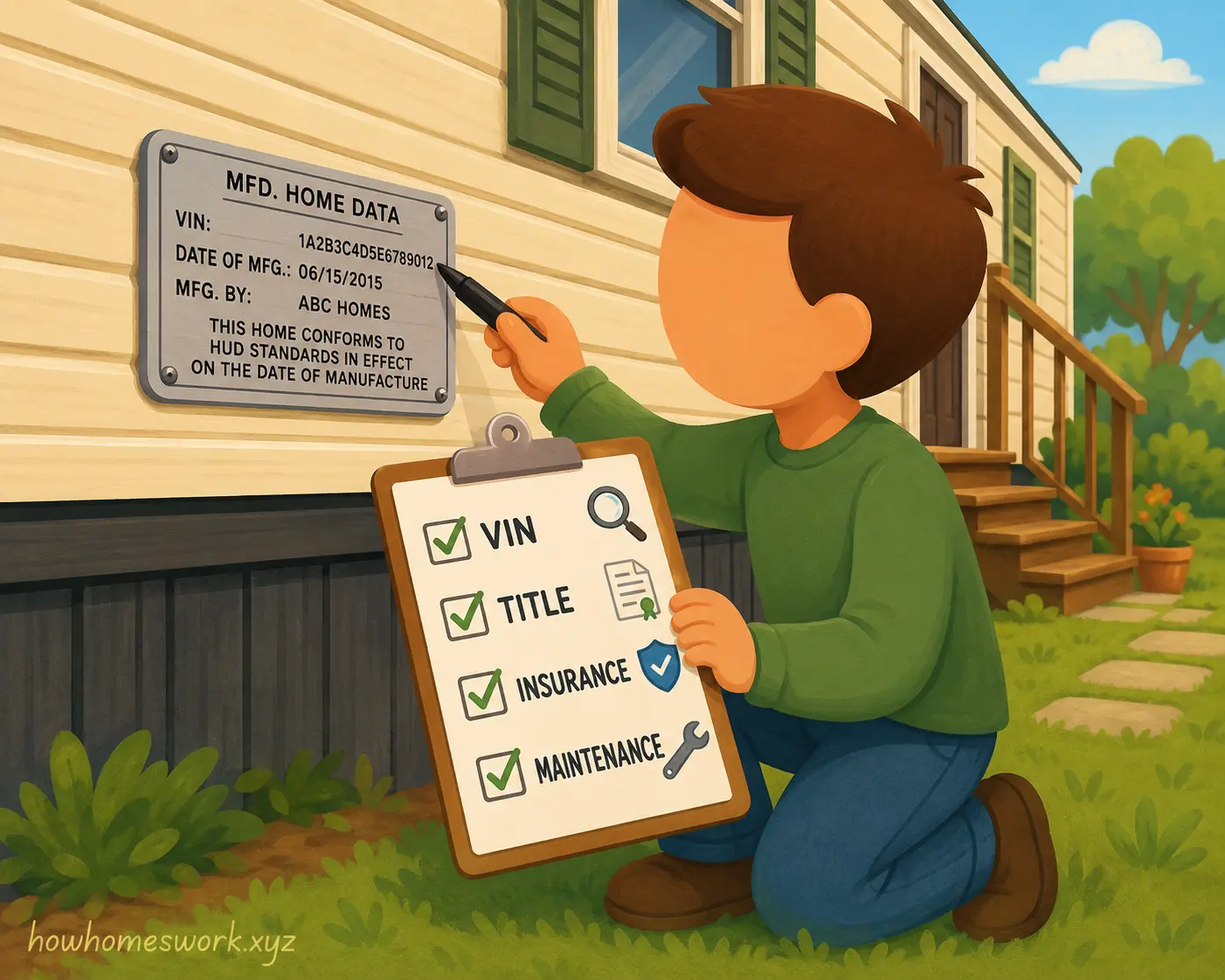
The first place you should check is the interior data plate. This paper label usually contains the serial number, manufacturer details, model information, construction date, and HUD certification references.
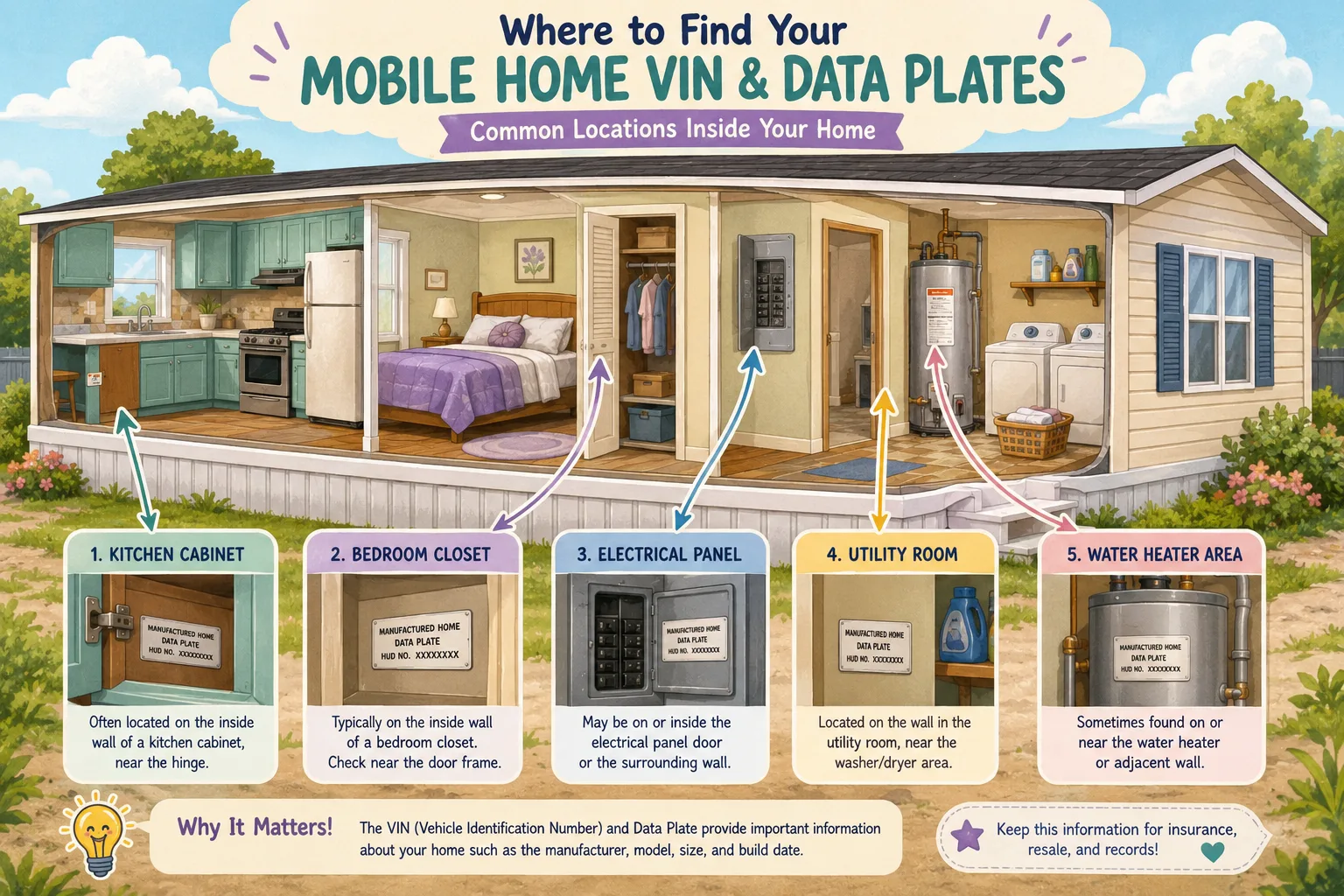
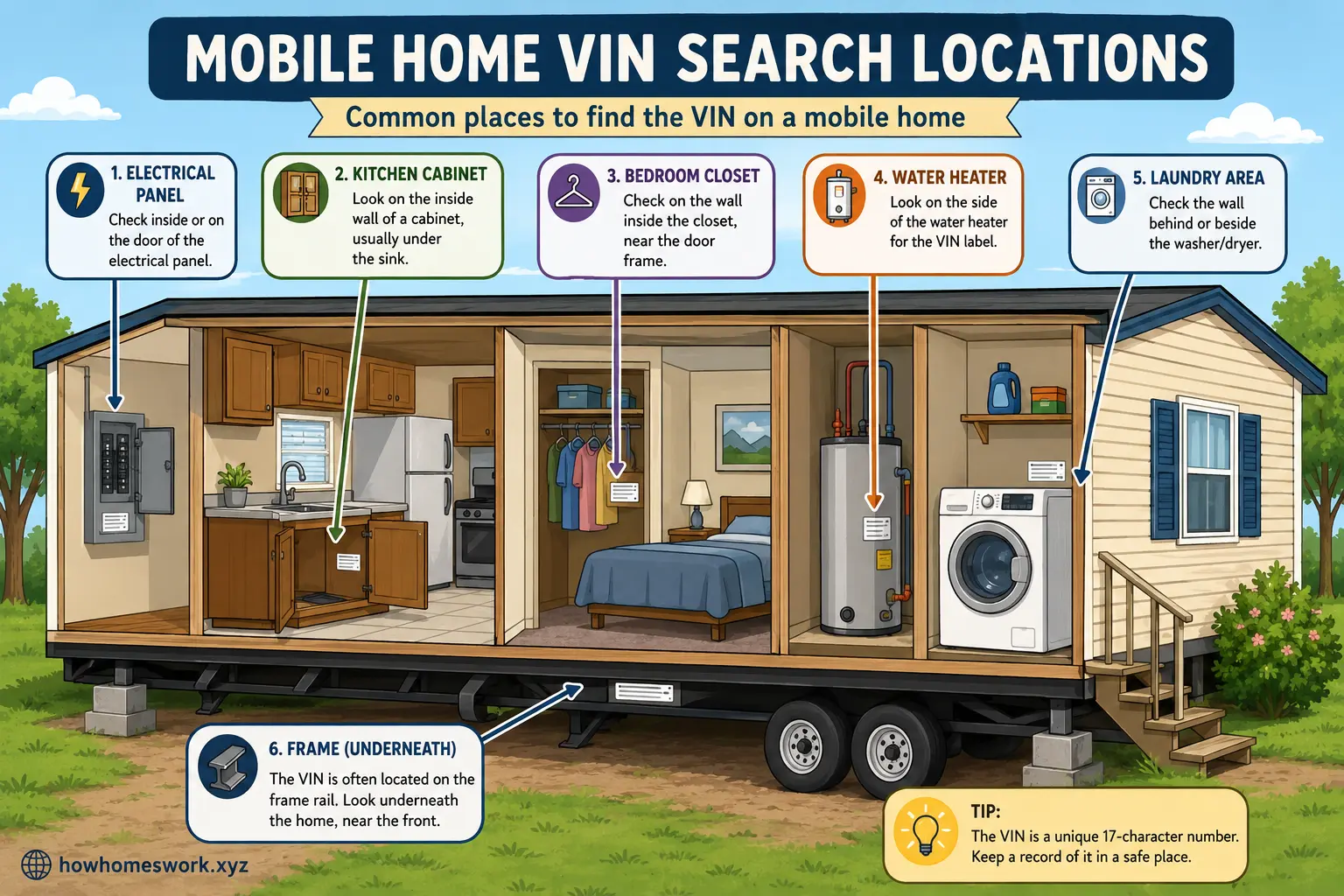
According to HUD guidelines, the data plate is commonly located:
- Near the main electrical panel
- Inside a kitchen cabinet
- Inside a bedroom closet
- Near the water heater
- In utility or laundry areas
The plate is typically the size of a standard sheet of paper and may appear faded after decades of humidity and heat exposure.
Kitchen Cabinets and Utility Areas
Kitchen cabinets are surprisingly common hiding spots for VIN information. Manufacturers often attached data plates inside cabinet doors or beneath sinks because those areas were less likely to experience physical damage.
Utility closets also serve as common locations because inspectors and technicians frequently access those spaces. Think of these areas like the backstage section of a theater. They are not glamorous, but they contain the operational details that keep everything functioning.
Homeowners searching online forums often report finding labels tucked inside pantry walls, behind washer hookups, or near furnace compartments.
Underneath the Mobile Home Frame
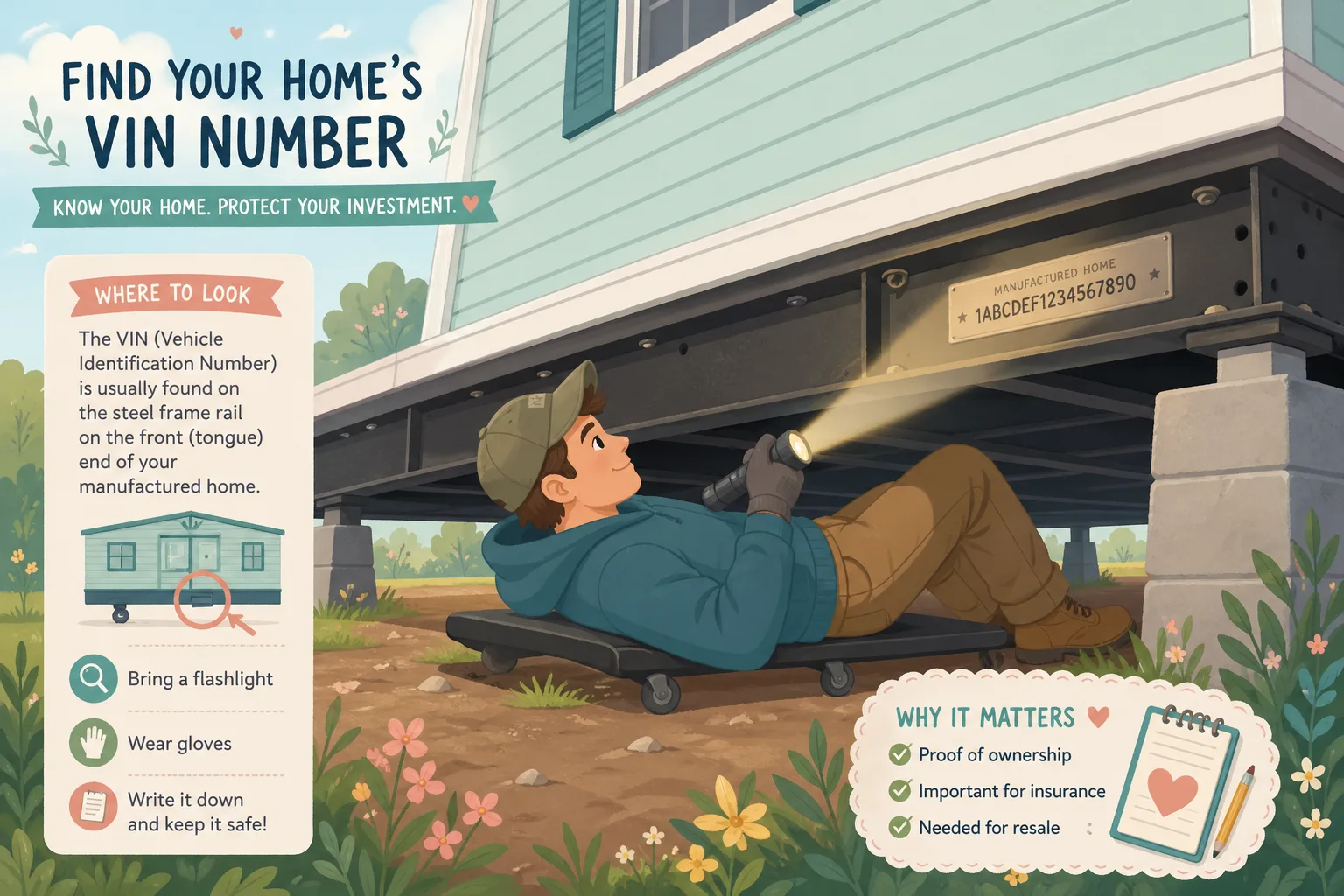
If the interior plate is missing, the next step is checking underneath the home. Federal regulations require the serial number to be stamped into the steel frame, usually near the front cross member where the hitch assembly was originally attached.
This location can be difficult to inspect because rust, dirt, insulation, or skirting may cover the metal beam. A flashlight, wire brush, and camera phone often help reveal faint stamping marks.
Single-wide homes usually have one serial number, while double-wide or triple-wide units may include separate section identifiers such as A, B, or C. HUD explains that multi-section homes often use these suffixes to identify each transportable portion.
YouTube tutorials from mobile home owners regularly demonstrate this process, showing how numbers are stamped directly into the steel chassis.
Exterior HUD Certification Label
The HUD certification label is another useful identifier. This small red metal plate is attached to the exterior rear section of each transportable unit.
The label confirms that the home met federal construction and safety standards at the time it was built. Although the HUD label is not technically the VIN itself, it often helps verify the home’s history and authenticity.
Unfortunately, these labels sometimes disappear during siding replacements or renovations. Some homeowners unknowingly cover them with paint or exterior upgrades. Others remove them entirely during remodeling, which can create major headaches later during financing or resale.
How to Read and Interpret the Number
Once you locate the VIN or serial number, the next challenge is understanding what it actually means. At first glance, the combination of letters and numbers may look random, but there is usually a pattern hidden within the code.
Understanding Manufacturer Codes
Manufacturers use prefixes and coding systems to identify production plants and model series. Some serial numbers begin with letters that indicate the inspection agency or manufacturing location.
For example, HUD labels often include a three-letter prefix followed by six digits. These prefixes help agencies track where the home was inspected and certified.
The serial number may also reveal:
- Manufacturer identity
- Production plant location
- Construction sequence
- Home model designation
- Year of manufacture
It is similar to decoding a product barcode. Each segment contains information that helps identify the home’s origin and specifications.
Identifying Single-Wide and Double-Wide Units
The structure type usually affects how the VIN appears. Single-wide homes generally have one primary serial number, while double-wide or triple-wide homes include section designations.
For example:
- Single-wide: ABC123456
- Double-wide: ABC123456A / ABC123456B
- Triple-wide: ABC123456A / B / C
These section identifiers matter because each transportable piece of the home must be accounted for during inspections, financing, and title transfers.
Understanding this structure prevents confusion when paperwork lists multiple identifiers. Many first-time buyers panic when they see several numbers on a title document, assuming something is wrong. In reality, multiple section numbers are completely normal for larger manufactured homes.
Official Records and Verification Methods
Sometimes the VIN cannot be physically located on the home. Labels may fade, steel beams rust, or renovations cover important identifiers. That is where official records become incredibly valuable.
Checking the Title and Registration Documents
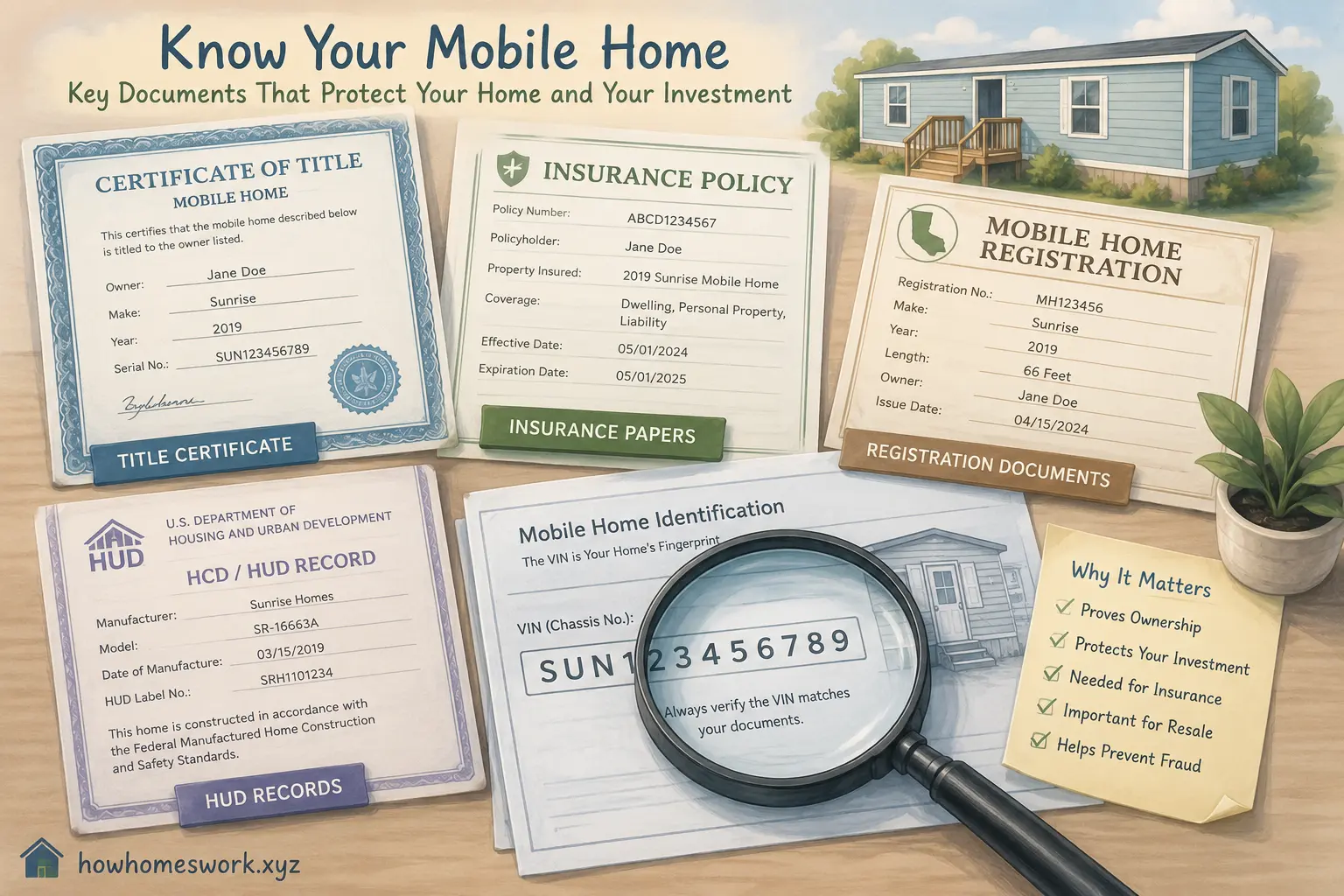
The easiest verification method is reviewing existing paperwork. Important documents often include:
- Title certificates
- Registration forms
- Mortgage paperwork
- Insurance policies
- Property tax records
- Affidavits of affixture
Many lenders recorded the VIN during previous financing transactions, even if the physical labels later disappeared.
If you purchased the home years ago, check old closing packets or loan documents stored in filing cabinets. You would be surprised how often the information has been sitting quietly in paperwork the entire time.
Contacting State Agencies and HUD
State housing agencies and motor vehicle departments often maintain registration databases for manufactured homes. Since regulations vary by state, some agencies treat mobile homes similarly to vehicles, while others handle them through housing departments.
HUD also provides assistance for manufactured home verification. According to HUD resources, homeowners can contact state administrative agencies or HUD’s Office of Manufactured Housing Programs for support.
These agencies may help confirm:
- Manufacturer information
- Certification status
- Label records
- Compliance documentation
- Historical ownership data
Using IBTS Verification Services
The Institute for Building Technology and Safety (IBTS) plays a major role in verification services for manufactured homes. HUD notes that IBTS can issue a Letter of Label Verification when official records are available.
This service becomes especially important when the original HUD labels are missing. Lenders and title companies often accept IBTS verification letters as proof of compliance.
The process usually requires:
- Manufacturer information
- Serial number or partial VIN
- Home location
- Ownership details
Think of IBTS as the historian for manufactured housing records. They maintain archives that help reconnect missing information with the physical home.
Problems You May Encounter While Searching
Finding a mobile home VIN is not always straightforward. Older homes especially can present frustrating complications that turn a simple search into a full investigation.
Missing VIN Plates and Rust Damage
One of the most common issues is corrosion. Steel frame numbers stamped decades ago may become difficult to read due to rust and weather exposure.
In some cases, homeowners accidentally remove or conceal labels during remodeling projects. Installing new siding, repainting walls, or replacing cabinets can cover important identifiers without anyone realizing it.
Online discussions reveal numerous stories of homeowners crawling underneath homes with flashlights and wire brushes trying to recover barely visible serial numbers.
If the number is partially visible, taking close-up photos and adjusting image contrast on a phone or computer may help reveal faded characters.
VIN Confusion in Older Mobile Homes
Homes built before HUD regulations changed in 1976 can create additional confusion because identification standards were less uniform. Some older units may lack modern HUD labels entirely.
This often causes misunderstandings during financing or inspections. Buyers may assume the absence of a HUD tag means the home is illegal or unsafe, even when it simply reflects older manufacturing standards.
Distinguishing between a modular home and a manufactured home can also complicate matters. Reddit users frequently discuss confusion over whether certain structures should have HUD labels or alternative certification systems.
That is why verifying records through official agencies becomes essential for older properties.
Importance of the VIN for Ownership and Maintenance
The VIN is not just useful during sales or financing. It also plays a huge role in long-term maintenance and property protection.
Tracking Repairs and Replacement Parts
Manufacturers often use serial numbers to identify original floor plans, appliance models, roofing systems, and construction materials. When repairs become necessary, the VIN helps technicians locate compatible replacement parts.
Imagine trying to repair a machine without knowing its model number. That is exactly what happens when contractors work on a manufactured home without VIN information.
The serial number can help determine:
- Original construction specs
- Factory-installed appliances
- Roof load ratings
- Wind zone certifications
- Plumbing and electrical layouts
HUD explains that the data plate includes details about wind zones, roof loads, and manufacturer-installed equipment. These details become incredibly important during renovations and storm repairs.
Protecting Against Fraud and Legal Issues
Fraud prevention is another major reason the VIN matters. The serial number helps verify the home has not been stolen, improperly transferred, or falsely represented during a sale.
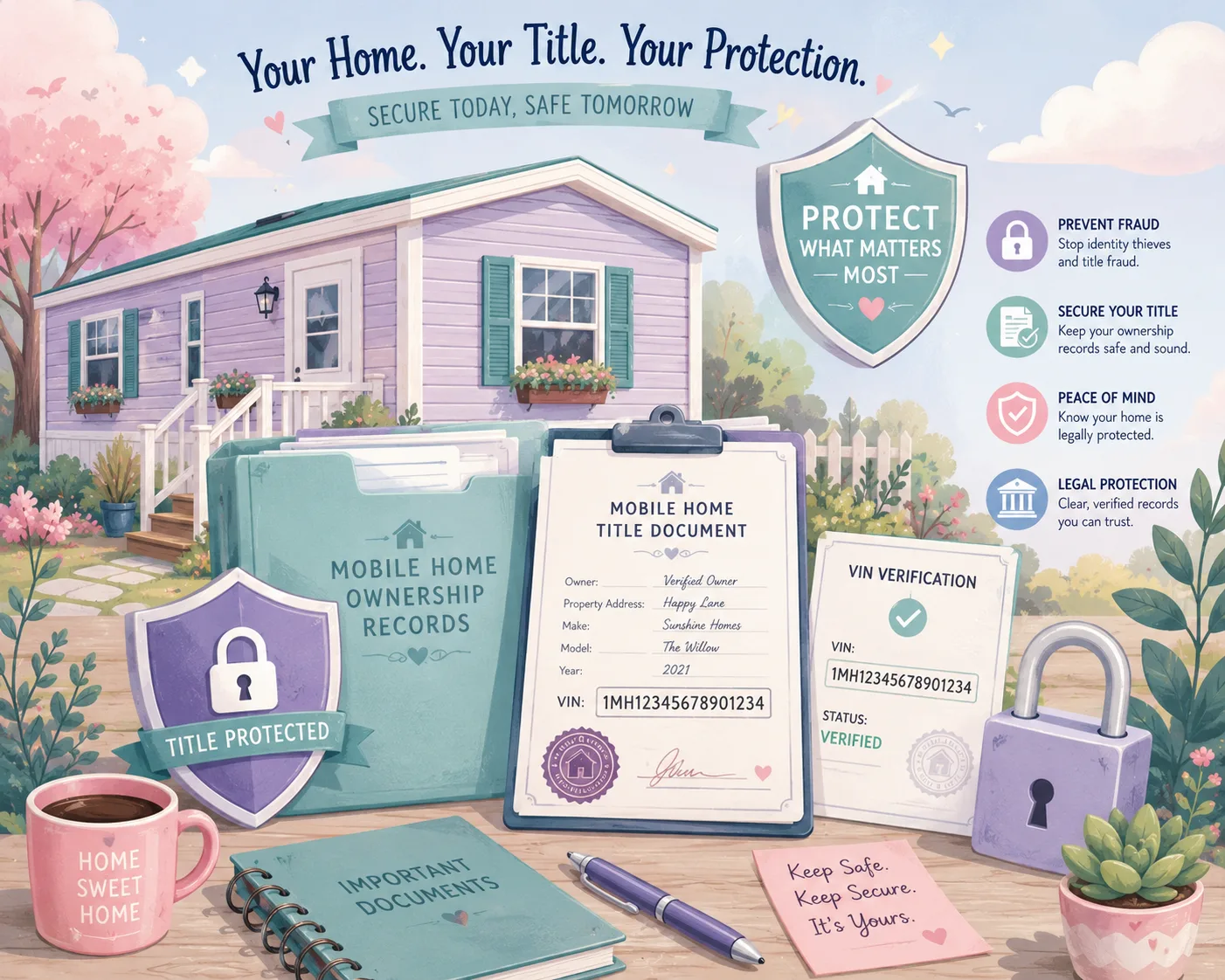
Title disputes involving manufactured homes can become messy because the structure and land may have separate ownership records. The VIN creates a reliable connection between the physical home and legal documentation.
It also protects buyers from unknowingly purchasing homes with unresolved liens or title problems. A proper VIN search allows title companies and agencies to trace ownership history and verify authenticity before transactions close.
In a way, the VIN acts like a digital fingerprint left behind by the manufacturer. It creates accountability, transparency, and legal clarity throughout the life of the home.
Conclusion
Finding a mobile home VIN number may seem intimidating at first, but the process becomes much easier once you know where to look. The most common locations include the interior data plate, the steel frame underneath the home, exterior HUD labels, and official ownership documents. Even when labels are damaged or missing, agencies like HUD and IBTS can often help verify records and recover essential information.
The VIN is far more than a random string of characters. It serves as the backbone of ownership verification, financing approval, insurance coverage, maintenance tracking, and fraud prevention. Without it, even simple transactions can become stressful and time-consuming.
Whether you own a single-wide unit passed down through generations or a newer double-wide home on private land, keeping VIN information documented and accessible can save enormous headaches later. It is one of those details that feels invisible until the exact moment it becomes absolutely essential.
FAQs
1. Is a mobile home VIN the same as a serial number?
In many states, yes. The VIN and serial number are often treated as the same identifier for manufactured homes, although terminology can vary by jurisdiction.
2. Where is the VIN usually located on a mobile home?
The VIN is commonly found on the interior data plate, inside cabinets or closets, or stamped into the steel frame underneath the home near the hitch area.
3. What happens if the HUD label is missing?
HUD does not reissue labels, but homeowners can request a Letter of Label Verification through IBTS if historical records are available.
4. Can I sell a mobile home without a VIN?
Selling without a VIN can be extremely difficult because lenders, title companies, and buyers typically require ownership verification. Missing VINs often delay transactions until records are verified.
5. How can I verify a mobile home VIN officially?
You can verify the VIN through state housing agencies, DMV records, title documents, HUD resources, or IBTS verification services.